As PATHS has grown, so has the complexity of the education being delivered on the platform.
Organizations aren’t just building one course or one-off training. They’re developing entire learning ecosystems — onboarding programs, certification tracks, refresher modules, compliance updates, and partner-specific education. And across those efforts, the same building blocks appear again and again: a core training video, a foundational document, a required form, a standardized quiz.
Until now, those components often had to be rebuilt or re-uploaded each time a new Path was created.
The PATHS Content Library changes that.
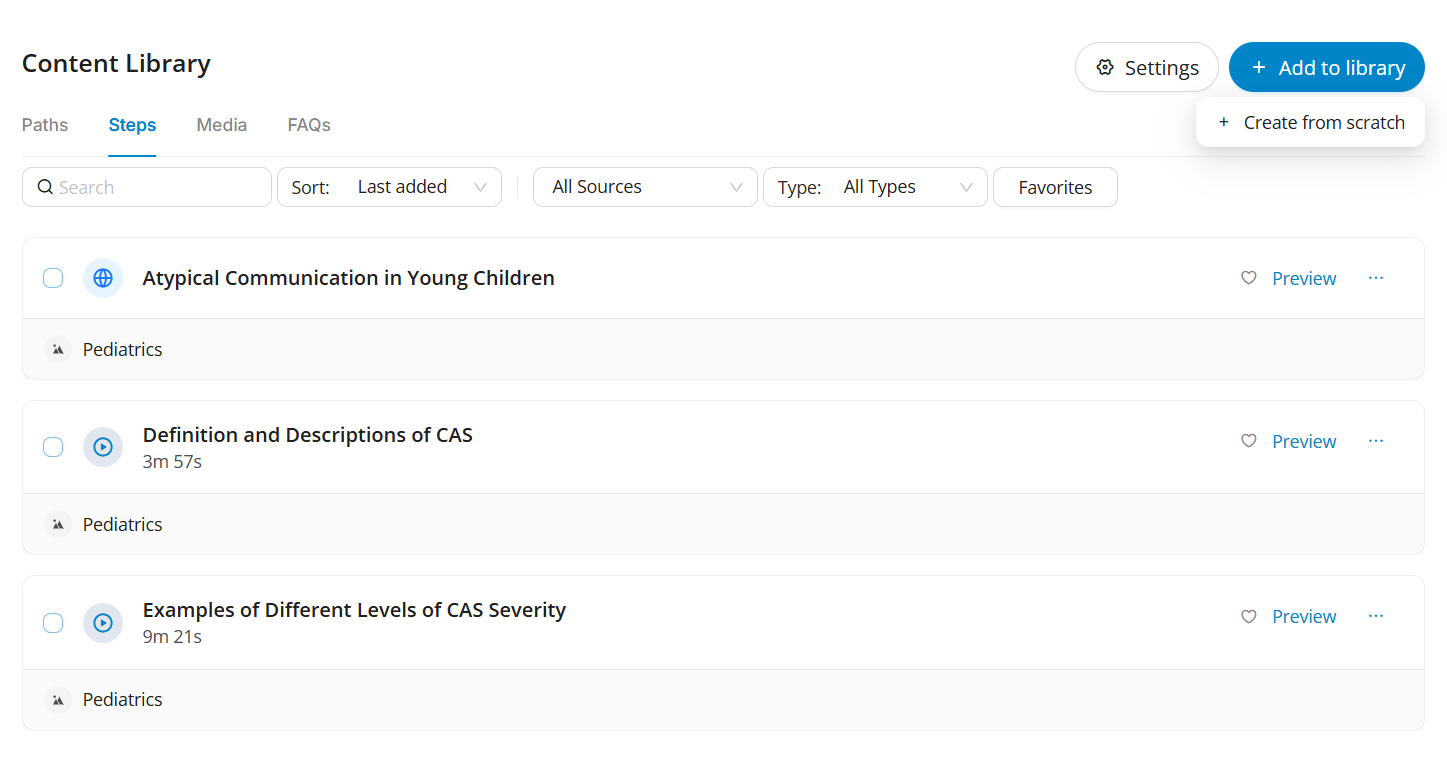
The concept behind the Content Library is straightforward:
Store approved educational components once. Reuse them across future Paths.
Within the Library, organizations can centrally manage:
These aren’t new content types. They’re the essential elements organizations already use to build meaningful learning experiences. What’s new is the ability to treat them as shared infrastructure rather than one-time uploads.
That shift may seem small on the surface. In practice, it changes how teams build.
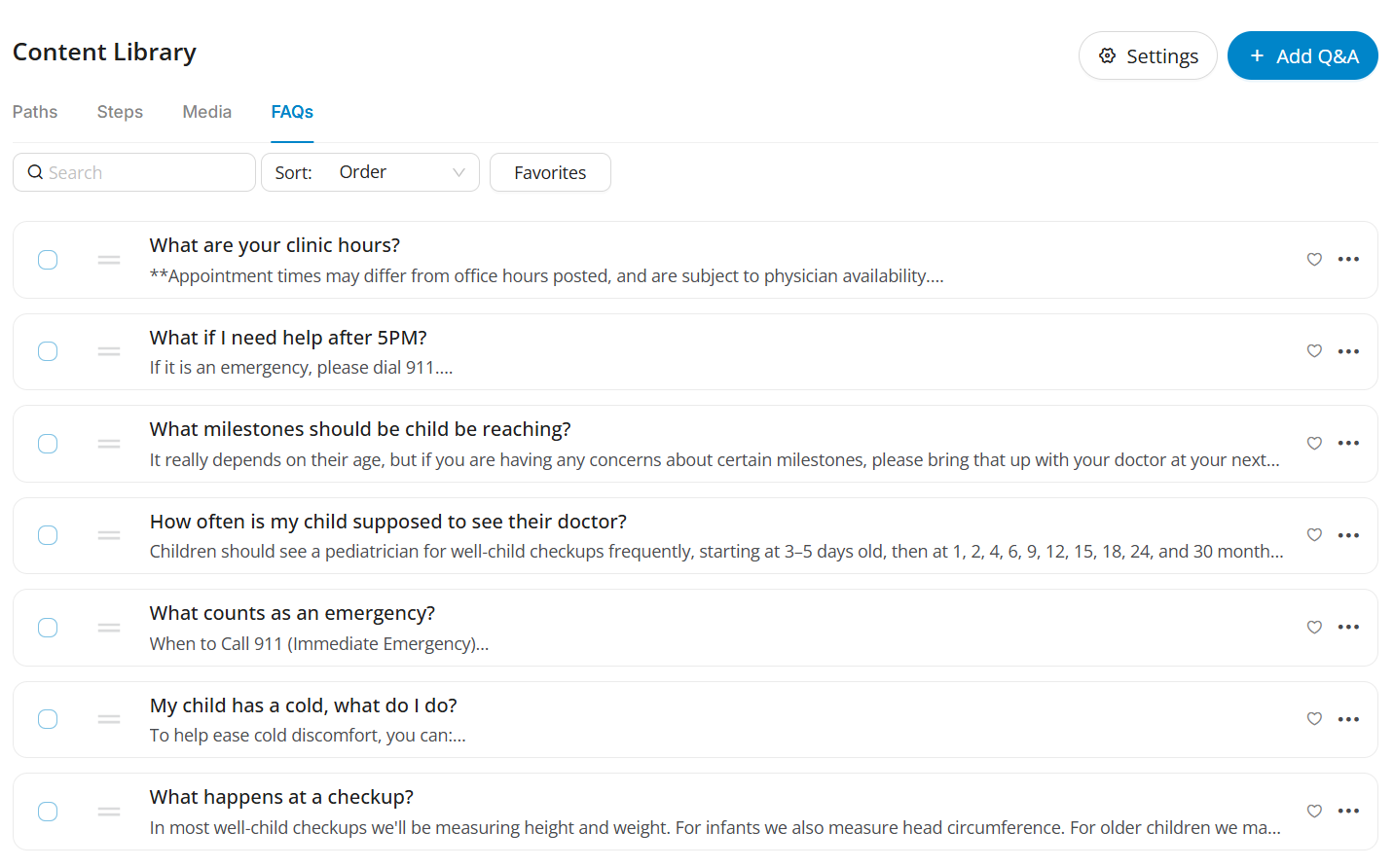
PATHS supports partners delivering licensed, credentialed, and often highly specialized education — including collaborations with organizations like Positive Approach to Care (PAC), founded by Teepa Snow.
In these contexts, content reuse isn’t just about convenience. It’s about accuracy and compliance.
When educational materials are centrally stored:
If a quiz is revised, a document updated, or a video replaced, administrators can update in one location and then easily copy that update to each instance of that step in their account, reducing the need to perform the changes mutliple times across multiple Paths.
This reduces risk while preserving trust — both essential in healthcare education environments that prioritize HIPAA-aligned security and organizational transparency.
The day-to-day reality of building education is rarely glamorous. It involves uploading files, double-checking links, confirming formatting, and making sure the right version is attached in the right place.
When those steps are repeated across multiple programs, friction builds.
The Content Library reduces that friction.
Instead of starting from zero with each new initiative, teams can start from a curated foundation. Core materials — onboarding guides, consent forms, baseline assessments, orientation videos — are already there, ready to be placed into a new Path.
This shortens development time and allows teams to focus on what actually differentiates their program: the strategy, the facilitation, the outcomes.
The introduction of the PATHS Content Library isn’t about adding more features. It’s about strengthening the structure behind the work.
As organizations expand their use of PATHS — across departments, partner sites, or geographic regions — consistency becomes more important. Messaging must align. Licensed materials must be protected. Learning experiences must remain measurable and repeatable.
A centralized content system supports that growth.
It helps organizations move from reactive content creation to intentional content management. From scattered uploads to governed assets. From duplication to sustainability.
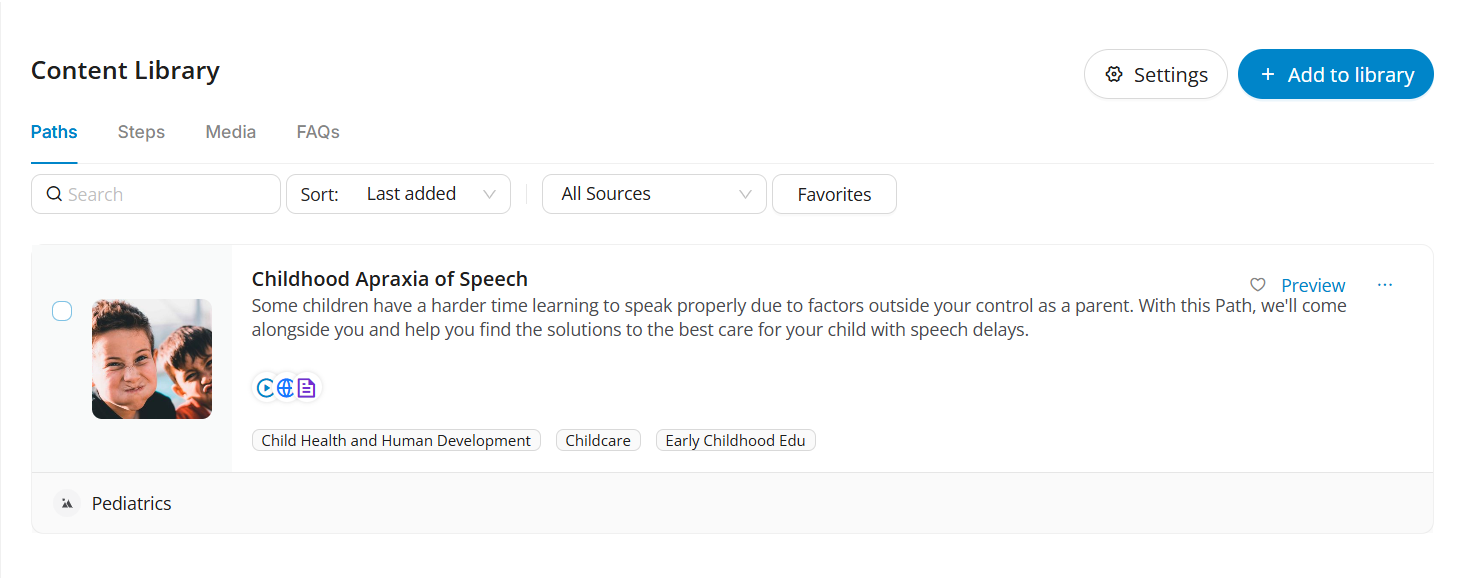
The Content Library also lays important groundwork for future ecosystem expansion — including collaboration models and broader content sharing across the PATHS network.
But at its core, this launch is about something simpler:
Helping organizations create once — and build on that work over time.
Because sustainable impact in healthcare education doesn’t come from constantly rebuilding.
It comes from designing systems that support clarity, consistency, and continuous improvement.
The PATHS Content Library is one step in that direction