
A Path to Fentanyl Reduction

Move beyond awareness campaigns. Deliver verified fentanyl education with measurable engagement and real-time tracking.

If it can’t be measured, it can’t reduce harm
Awareness | Fentanyl Kills
Book a Meeting Today

Background

America’s youth are facing a rapidly escalating fentanyl crisis that mirrors—and in some areas exceeds—a national public health emergency. Across the United States, pediatric fentanyl exposures have surged by 1,194% since 2015, while drug overdoses have become the third-leading cause of death among children and adolescents, claiming the equivalent of a high school classroom—22 young lives—every week.

While emergency responses (e.g., Narcan distribution, task forces) are underway, a critical gap remains:

There is no scalable, measurable system delivering coordinated fentanyl education across students, teachers, and families.

Challenges

Reducing fentanyl use and accidental overdose in schools is a complex challenge with a critical gap. There is no scalable, measurable system to educate students, teachers, and families about the dangers associated with fentanyl.
  • No verification: School systems don't currently have any way of verifying that students have heard about the dangers of fentanyl.
  • No engagement tracking: Existing methods don't track student and family engagement with the coursework assigned to them.
  • No reinforcement: There's not currently any goal associated with fentanyl education other than checking the box.
  • No measurable ROI: No tracking metrics exist to compare the cost of fentanyl education with the cost of youth hospitalizations or incarcerations.

Solution

The Path to Fentanyl Reduction Program (PFRP) is a comprehensive, technology-enabled prevention initiative designed to deliver guided education, documented engagement, and measurable outcomes across entire school communities.
  • Students: Structured, age-appropriate digital learning modules focused on fentanyl risk, decision-making, and prevention.
  • Teachers: Professional development, facilitation tools, and implementation support.
  • Parents: Reinforcement education, conversation guides, and community resource access
PFRP is delivered through a secure digital care navigation platform (PATHS). enabling:
  • Step-by-step guided learning ("Paths")
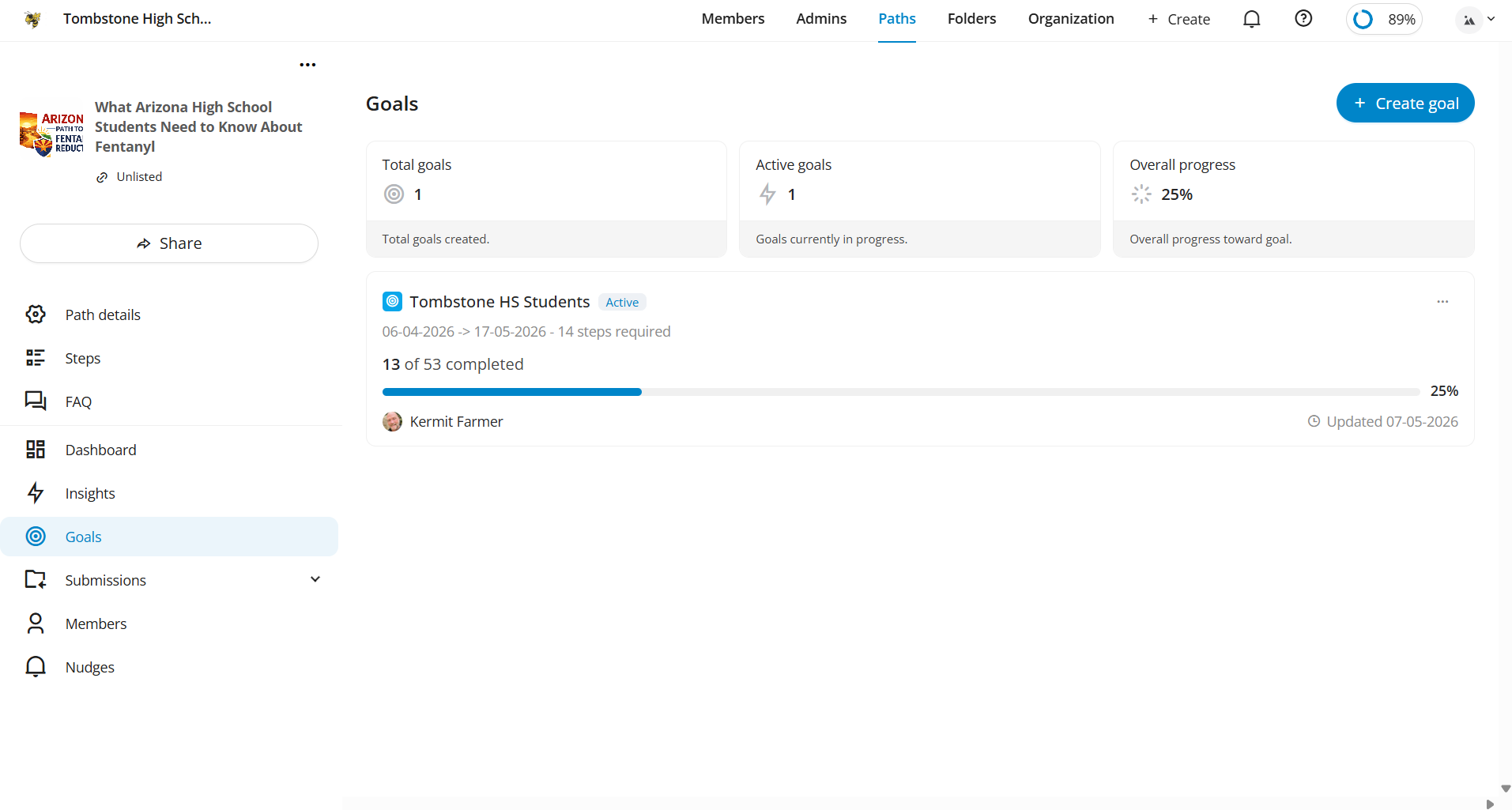
  • Timestamped engagement tracking
  • Completion verification
  • Real-time analytics dashboards
The platform operated within a HIPAA-compliant & SOC2-aligned infrastructure, ensuring:
  • Secure handling of participant data
  • Privacy-forward architecture
  • Audit-ready documentation
  • Responsible stewardship of public funds

How it Works

1. School Expresses Interest in Fentanyl Education
The journey begins when school leadership reaches out to prioritize student safety. We connect with your administration to assess your community's specific needs and introduce the core concepts of the PATHS curriculum.

2. Educators Onboarded to PATHS Platform
Our streamlined onboarding process equips teachers with the tools, resources, and confidence to navigate the platform effectively. We provide comprehensive, easy-to-follow support so your staff is fully prepared to lead these vital conversations.

3. Parents Receive Personal Path
Because awareness doesn't stop at the classroom door, parents are given access to their own customized learning portal. This empowers families with the facts and guidance needed to facilitate critical, life-saving discussions at home.

4. Students Go Through Their Path
Students engage with age-appropriate, interactive modules designed to build true awareness and resilience. By completing their dedicated path, they gain the essential knowledge needed to navigate today's risks and make safe, informed choices.
Book a Meeting Today

Meet the Subject Matter Experts

Holly L. Geyer, M.D., is an Associate Professor of Medicine at Mayo Clinic, dual board certified in Internal Medicine and Addiction Medicine. She leads Mayo Clinic’s Opioid Stewardship Program in Arizona and serves as President of the Arizona Society of Addiction Medicine. A prolific researcher with over 200 publications, Dr. Geyer is a nationally recognized expert on addiction neurobiology and the author of Ending the Crisis: Mayo Clinic’s Guide to Opioid Addiction and Safe Opioid Use. She also advises the NFL Alumni Association on public health initiatives.

Allison J.

Huff, DHEd

Associate Professor of Family and Community Medicine, dedicated to transforming how we understand, and treat, opioid use and chronic pain.

Skip

Long

Grant Procurement, with 20 years of experience in federal and state funding. Managing over 100 million in budget assets.

Krystal M.

Renszel, D.O.

Internal and Hospital Medicine Specialist, dedicated to translating 14 years of medical expertise into uniform, actionable overdose response strategies for our youth.

Initiative Objectives

The Path to Fentanyl Reduction Program (PFRP) aims to complete the following objectives:
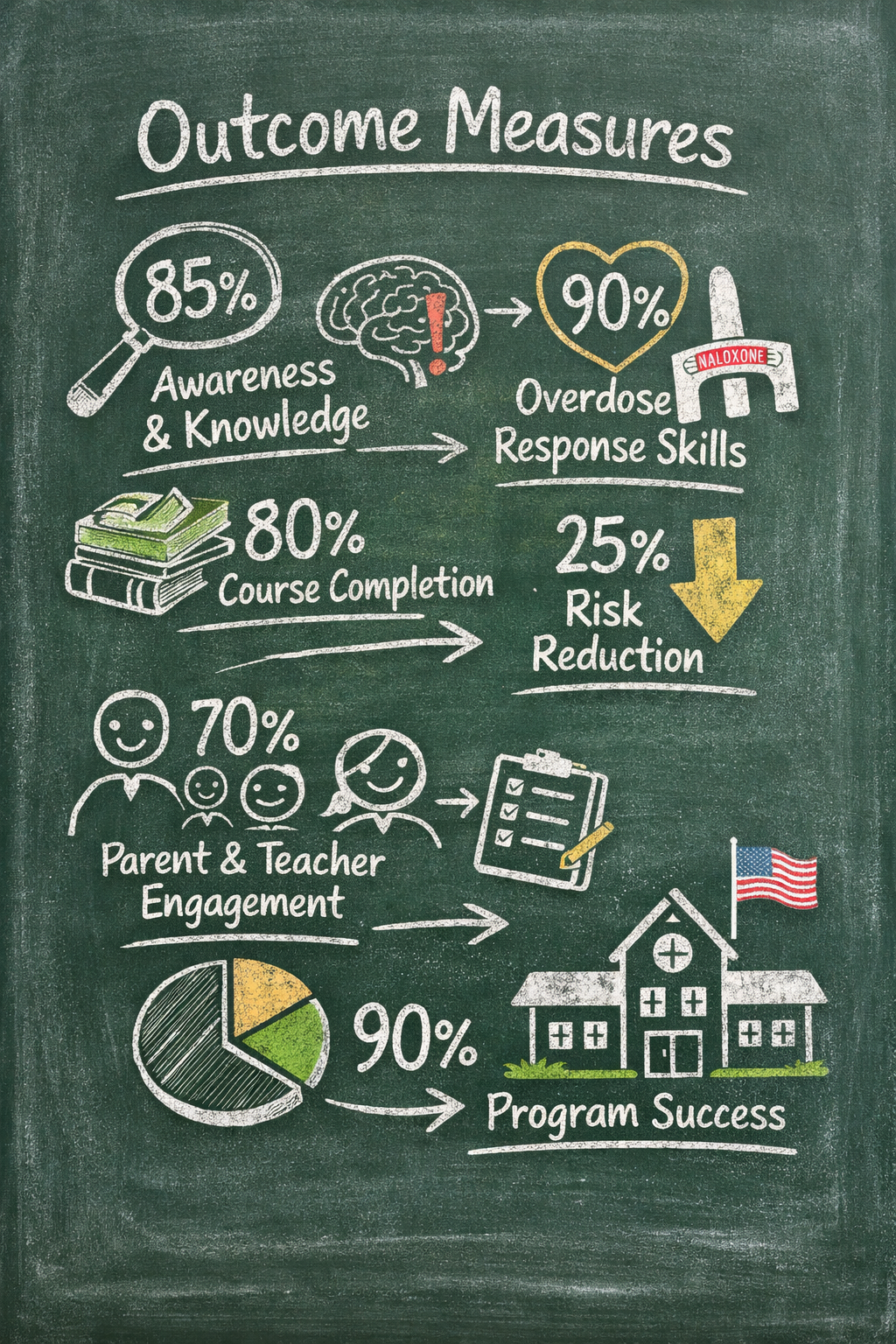
  • Increase Student Awareness and Risk Recognition: 85% or more of participating students should demonstrate improved knowledge of fentanyl risks (pre/post assessments)
  • Drive Documented Engagement Across Stakeholders: 80% or greater students of students should complete the coursework, and 70% or more of teachers and parents.
  • Equip Teachers and Parents with Overdose Recognition and Response Skills: 90% or more of participating teachers and parents should demonstrate an understanding of how to recognize the signs of an opioid overdose, as well as what naloxone (Narcan) is and when it should be used. 85% or greater increased confidence in responding to a suspected overdose situation due to standardized guidance on overdose response protocols aligned with local policy.
  • Reduce Risk Behavior Indicators Among Students: 25% or more reduction in self-reported intent to use illicit substances.
  • Strengthen School and Community Response Capacity: All participating schools will be equipped with standardized curriculum and reporting tools with 90% or more teacher implementation fidelity. Integration of overdose awareness and response education into ongoing school and family engagement pathways with 90% or more teacher implementation fidelity.
Book a Meeting Today

Conclusion

America’s fentanyl crisis demands a response that is not only urgent, but coordinated, measurable, and scalable. The Path to Fentanyl Reduction Program represents a next-generation approach—one that moves beyond awareness to deliver structured education, documented engagement, and accountable outcomes across students, educators, and families.

Grounded in clinical expertise, supported by national subject matter leaders, and delivered through a secure, HIPAA-compliant and SOC 2–aligned infrastructure, this program provides a defensible, evidence-informed solution to one of the most pressing public health challenges facing our schools today.

This is not simply an education initiative—it is a measurable public health intervention designed to reduce risk, strengthen communities, and save lives.
Book a Meeting Today

Key Takeaways

  • A Crisis With No Coordinated Response: Fentanyl exposure among Americca's youth has surged, making drug overdoses the third-leading cause of death among youth.
  • Key Gaps in Current Approaches: Existing efforts lack verification, engagement tracking, reinforcement, and measurable ROI.
  • The Solution — The Path to Fentanyl Reuction Program: A structured digital program delivering age-appropriate learning for students, development tools for teachers, and guided resources for parents through a secure, HIPAA-compliant platform with real-time analytics.
  • Measurable, Ambitious Outcomes: Targets include student knowledge improvement, course completion, overdose response readiness among adults, and a reduction in students' intent to use illicit substances.
  • Expert-Led and Fiscally Accountable: Built by nationally recognized clinicians, the program gives funders real-time performance visibility — with downstream savings expected across healthcare, education, and public safety.