

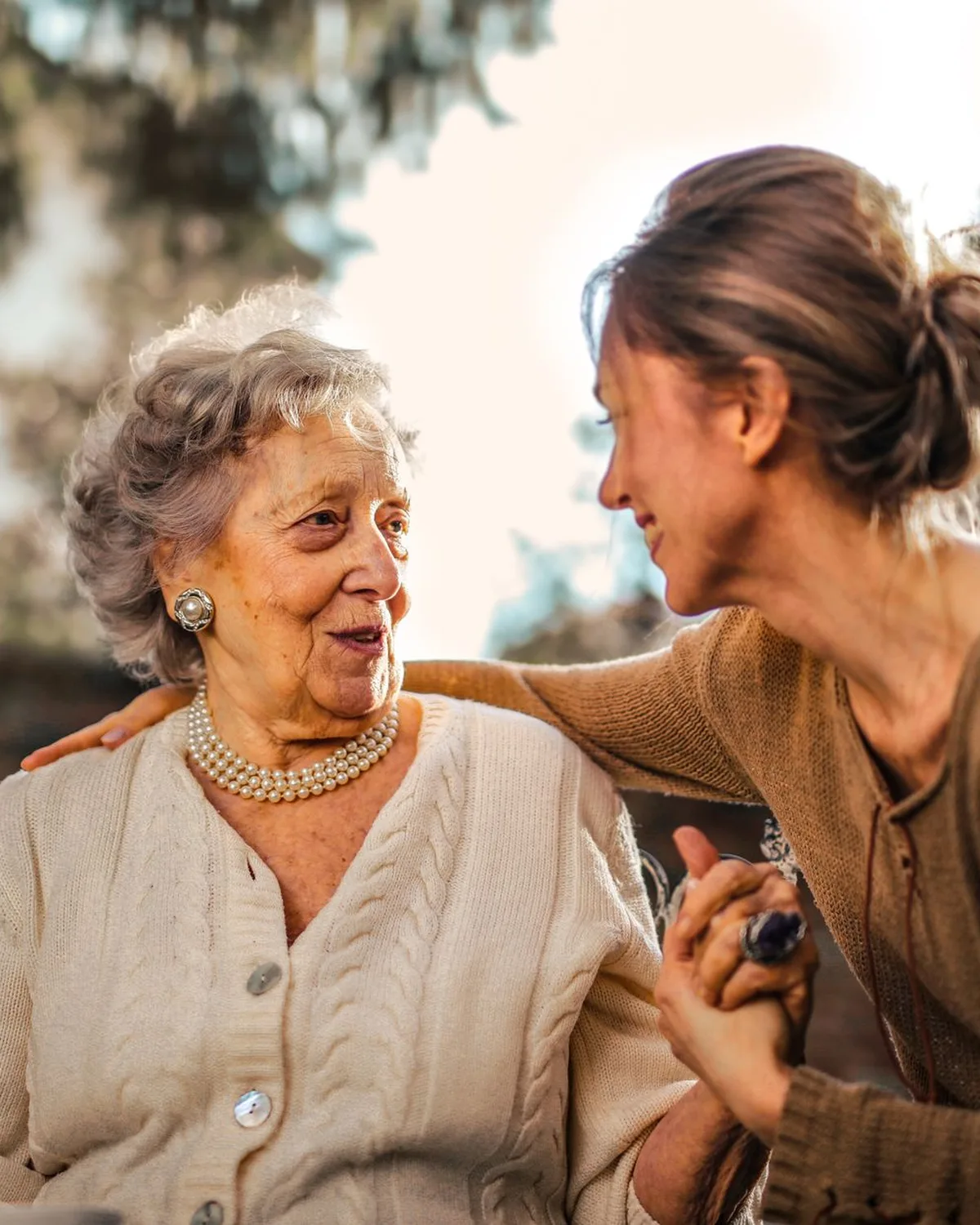
Better Prepared Caregivers.Better Patient Journeys.
Behind many patient journeys is someone helping manage medications, coordinate appointments, understand instructions, make decisions, and provide emotional support.
Caregiving can be rewarding, but it can also be overwhelming, especially when responsibilities are unfamiliar or change over time.
PATHS helps healthcare organizations prepare, guide, and support caregivers throughout the journey, giving them the knowledge, confidence, and resources to better care for someone they love.
The Patient Struggles When the Caregiver Struggles.
Caregivers are often expected to take on complex responsibilities with limited preparation.
They may need to understand a diagnosis, coordinate care, manage daily routines, recognize changes in a patient's condition, and know when to ask for help.
At the same time, they're managing their own lives, emotions, and well-being.
When caregivers don't have the support they need, it can become harder to provide consistent care.
Supporting the caregiver is part of supporting the patient.
A patient and caregiver may share the same care plan, but they experience it differently. The patient is learning, acting, adjusting, and progressing through care. The caregiver is preparing, supporting, adapting, and managing their own well-being. These are distinct but interconnected journeys. Supporting one helps support the other.
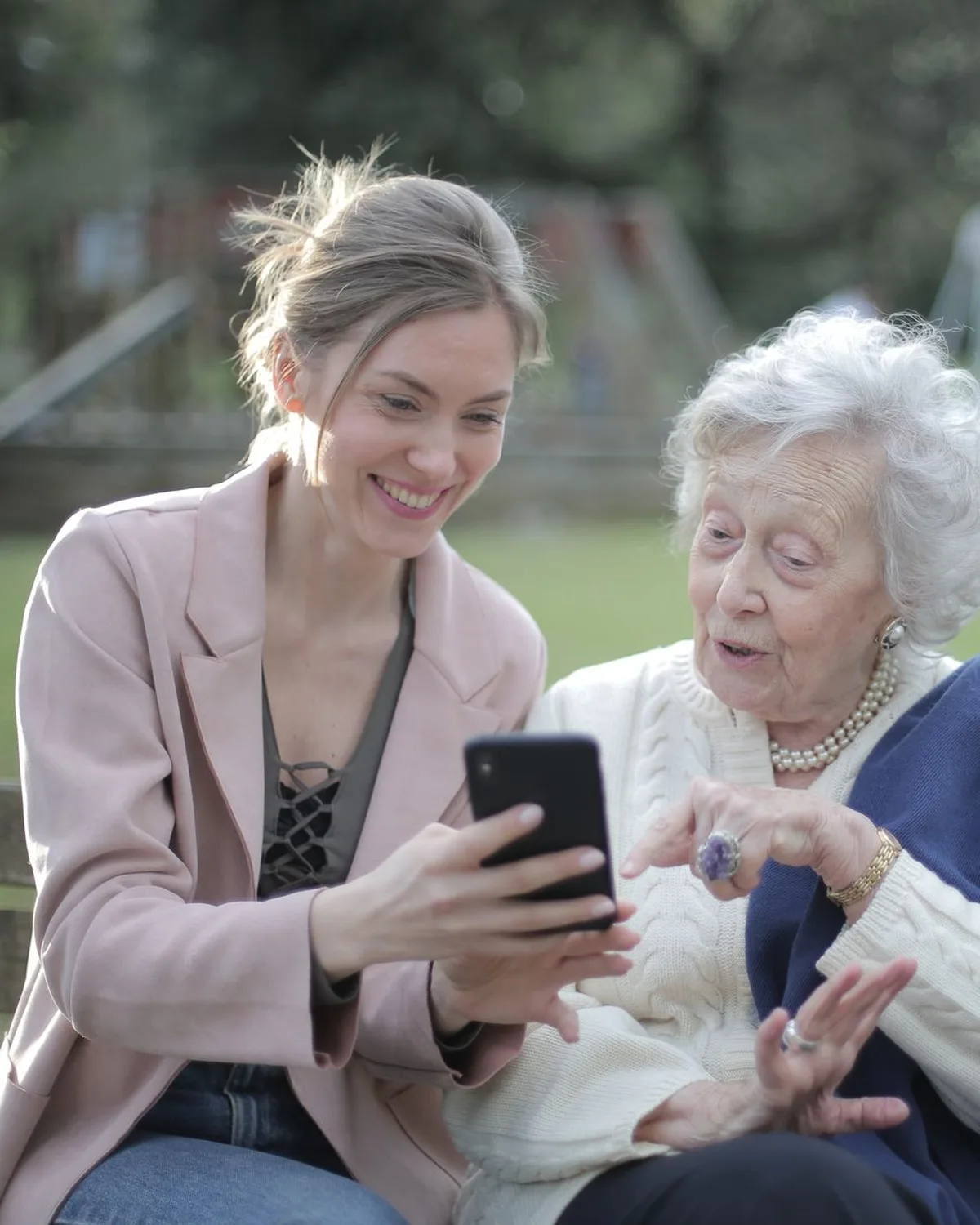
From Feeling Overwhelmed to Feeling Capable.
Caregivers need more than information. They need the confidence and ability to put that information into practice.
PATHS helps healthcare organizations guide caregivers through manageable Steps, reinforce important knowledge, and assess understanding along the way.
As caregivers build knowledge and develop practical skills, they can become better prepared to make decisions, recognize when help is needed, and participate in the care process.
Care teams can also gain visibility into caregiver engagement and demonstrated understanding, creating opportunities to offer support where it's needed most.
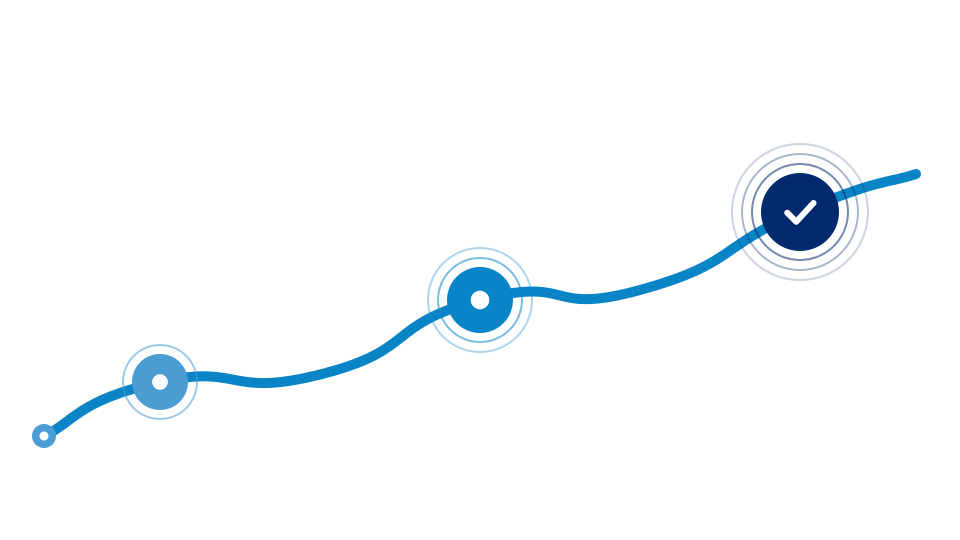
- Knowledge builds confidence.
- Confidence supports action.
- Action creates agency.
The Caregiver's Health Matters, Too.
Caregiving can affect physical health, emotional well-being, relationships, and daily life.
When the focus is entirely on the patient's needs, the caregiver's own health can be overlooked.
PATHS can help organizations incorporate caregiver well-being into the journey through education, self-assessments, check-ins, and resources designed to encourage healthy routines and timely support.
Caregivers can be guided to recognize signs of strain, seek assistance, and understand that caring for themselves is an important part of sustaining care for someone else.
A supported caregiver is better positioned to provide sustained support.
Meet Ravi.He Starts the Caregiver Readiness Path.
Follow Ravi through an illustrative seven-Step Path as he prepares to help his mother at home after a hospital stay. A hospital could use this structure to prepare the family caregiver named in the discharge plan, reinforce the care tasks its team teaches, and help caregivers know who to call and where to find support for themselves.
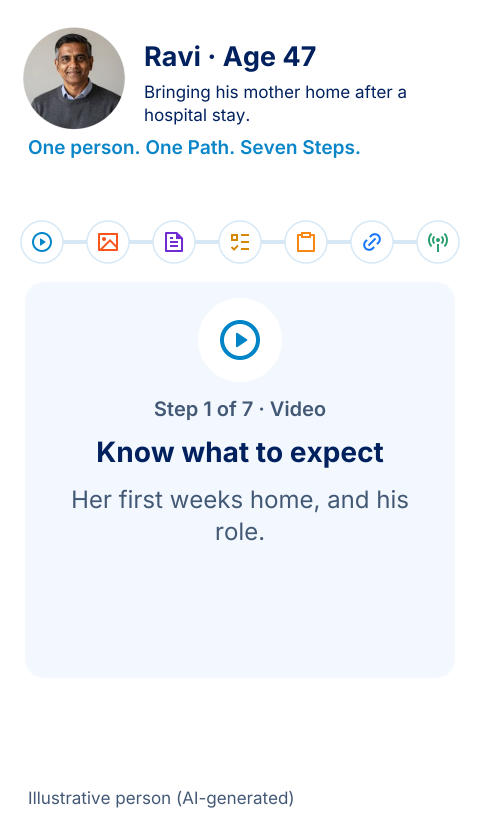
Illustrative person (AI-generated). Illustrative educational Path. Completion does not establish a clinical outcome.
Read the Path Steps
- Video: Know what to expect
A short video from his mother’s care team: what her first weeks at home may involve, the help she will need each day, and Ravi’s part in her discharge plan.
- Image: Review the care tasks
A picture guide to the tasks the team showed Ravi and practiced with him before discharge, such as helping her move safely, to look back on at home.
- Document: Keep her medicines list
Her up-to-date medicines list: what each medicine is for and when she takes it, as her team instructs, to bring to every appointment.
- Quiz: Know who to call
Practice which changes her team asked him to call about, and which signs mean calling 911 right away, such as chest pain, trouble breathing or sudden confusion.
- Form: Check on his own health
A short self-check on his sleep, stress and own health, with the signs of caregiver strain to watch for, to bring to his own doctor.
- Link: Find respite and support
Links to respite care, caregiver support groups and local services through the Eldercare Locator and his Area Agency on Aging.
- Virtual Event: Join a caregiver check-in
A video check-in with her care team in the first weeks at home, to ask his questions and share how caring for her is going.
Every Workflow Should Save the Health System Time and Money.
Assign a value to the Caregiver Readiness Path and see the results.
Path Value Estimation
How many times your team already does this workflow each year.
65.5staff hours saved per year
$2,291estimated value per year
Change the assumptions above to see your estimate of time and money saved.
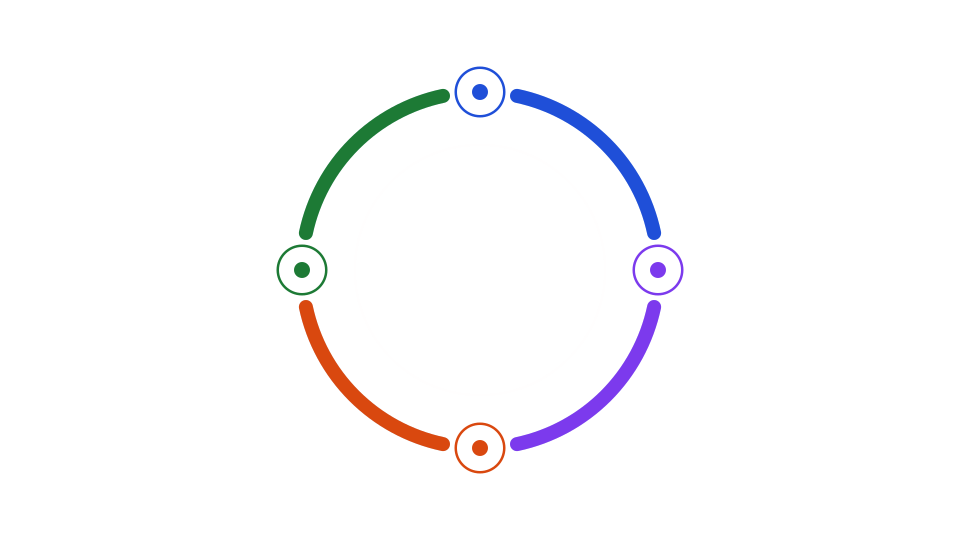

CREATE
The care team builds a Caregiver Readiness Path once.
Care teams turn the caregiver preparation they repeat before every discharge into a structured Path and assign it a value of 21 minutes of staff education time saved per patient.
ENGAGE
Caregivers like Ravi learn and act.
Each year, 187 caregivers like Ravi prepare before a patient goes home with the Caregiver Readiness Path, saving 21 minutes of education time each.
KNOW
Data shows the impact.
That adds up to 3,927 minutes (65.5 hours) of staff time, worth an estimated $2,291 a year at $35.00 an hour.
IMPROVE
Insights improve the next Path.
Engagement, knowledge checks and questions show where caregiver readiness guidance was clear or confusing, so the care team can refine it for the next patient.
Every Caregiver Support Journey Creates an Opportunity to Improve the Next.
Estimates are illustrative and use the assumptions above. They are not measured results.
Ravi's Care Leads to More Than One Path.
What begins with his mother's discharge from the hospital leads to more than one Path. From getting ready to bring her home to her medicines, a safe home, a new symptom to call about, returning to work, his own well-being, support in the community and her follow-up visit, Ravi needs guidance at every stage. PATHS connects multiple Paths into an experience tailored to his changing needs, and each Path could save the care team time, not only the first. This journey is illustrative.

Ravi's Experience Becomes Health System Intelligence.
Ravi's care for his mother doesn't stop at one Path. After her hospital stay, the health system could provide a Path for each part of the journey: getting ready to bring her home, her medicines, his own well-being as a caregiver, support in the community, and her follow-up visits. Each Path Ravi completes also shows the care team what he engaged with, what he understood and what he still had questions about.
Medicines at Home Path
Ravi keeps the team's instructions for his mother's medicines in one place. The questions caregivers ask show the team which instructions need clearer teaching.
Caregiver Well-being Path
Ravi finds support for the demands of caring for his mother while he works. How caregivers respond helps the team see who may need more help, and sooner.
Follow-up Visit Path
Ravi and his mother arrive at her follow-up visit prepared. Knowing what families want to discuss helps the team use visit time well.
The more the health system knows about each patient's experience and journey, the better it can make its workflows. What Ravi and every other caregiver engage with, understand and ask about becomes health system intelligence: the team learns from every patient and refines each Path, so the next patient's experience is better. Clearer Paths mean fewer repeat calls and less time re-teaching the same education, and that saves time and money across the health system.
SPOTLIGHT
Our Founder Was a Caregiver.

Before founding PATHS, Kermit Farmer was a caregiver for his wife, Dr. Linda Farmer, an oncologist who dedicated her life to caring for others.
During the COVID-19 pandemic, Linda was battling gastric cancer. Following surgery, she faced difficult wound care needs, with limited outside support.
That experience shaped Kermit's understanding of the caregiver journey and his determination to help others feel better prepared, supported, and capable.
In Kermit's words:
“There were times I felt powerless, even hopeless.
I loved her with everything, yet I often felt inadequate to give her the care she needed. I felt I wasn’t enough. We were in the middle of COVID. Help was limited, and managing her needs after surgery was incredibly difficult.
It affected my health. My weight ballooned to 293 pounds. It affected my sleep. My emotions. And I knew it affected her, too. But I felt I had to keep it all together.
I didn’t lack commitment. I lacked the tools, resources, and sense of agency to do everything I needed to do for her.
Second-guessing yourself while providing life-sustaining care you’re not trained to deliver, from administering TPN to managing complex wounds, is something I will never forget.
Her wound never healed. Nor will my heart.
But something meaningful can come from that experience.
The next caregiver can be better prepared than the one before, and the one before that. I want them to have the knowledge, support, and confidence to make a difference, and to know when what they're doing is working.
That’s my quest.”
Support Caregivers. Learn From Their Experience.
Healthcare organizations often have limited visibility into whether caregivers understand their responsibilities, feel prepared, or are engaging with the resources provided.
PATHS helps make that experience more visible.
Through engagement records, assessments, surveys, and progress tracking, care teams can better understand how caregivers interact with guidance, where knowledge gaps may exist, and when additional support could be useful.
Organizations can use those insights to improve caregiver resources, refine workflows, and evaluate support initiatives over time.
When caregivers can see their progress and care teams can understand their needs, there is more opportunity to build on what works.
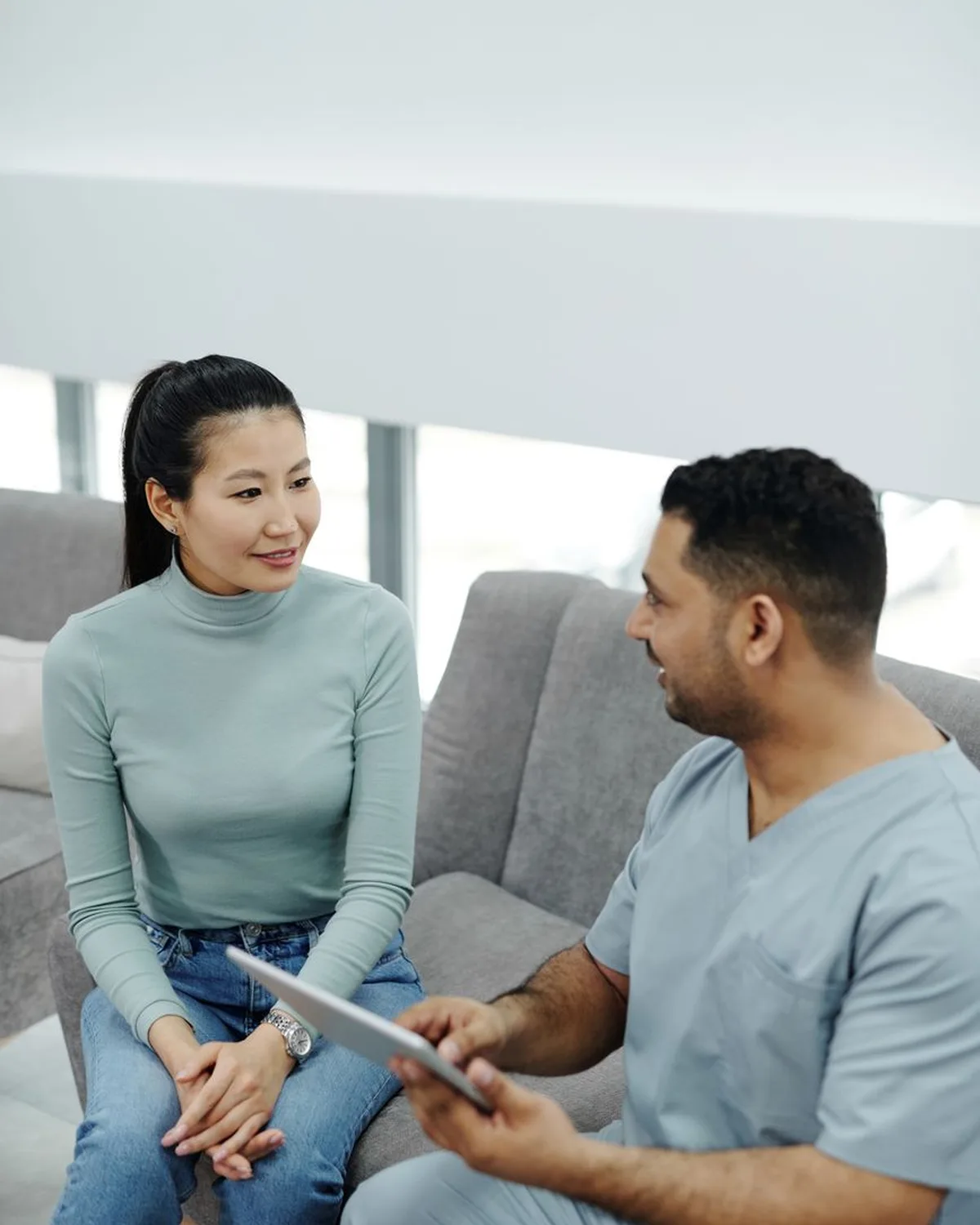
Better Support for Every Caregiver.
- CREATEDevelop structured caregiver guidance tailored to the condition, responsibilities, and stage of care.
- ENGAGEHelp caregivers learn, practice, and take meaningful action.
- KNOWUnderstand engagement, knowledge, progress, and caregiver-reported experiences.
- IMPROVEUse what is learned to strengthen caregiver support for future patients and families.
Better Prepared Caregivers Help Close Gaps in Care.
Caregivers are essential partners in many patient journeys. Yet gaps in knowledge, preparation, resources, and support can make their responsibilities more difficult.
PATHS helps healthcare organizations identify where caregivers may need additional guidance, support their well-being, and strengthen their ability to participate in care.
Every caregiver journey offers an opportunity to learn what works and better prepare the next.
Start with one caregiver journey. Learn what works. Build from there.