
Workforce Development
Build a More Capable, Confident Healthcare Workforce.
Healthcare professionals need more than training requirements and completion records. They need the knowledge, skills, and confidence to perform their roles effectively and make a meaningful difference for the people they serve.
PATHS helps healthcare organizations create engaging learning journeys, demonstrate understanding, and support professional growth while making workforce development measurable over time.
Because completing training isn't the same as demonstrating competency.
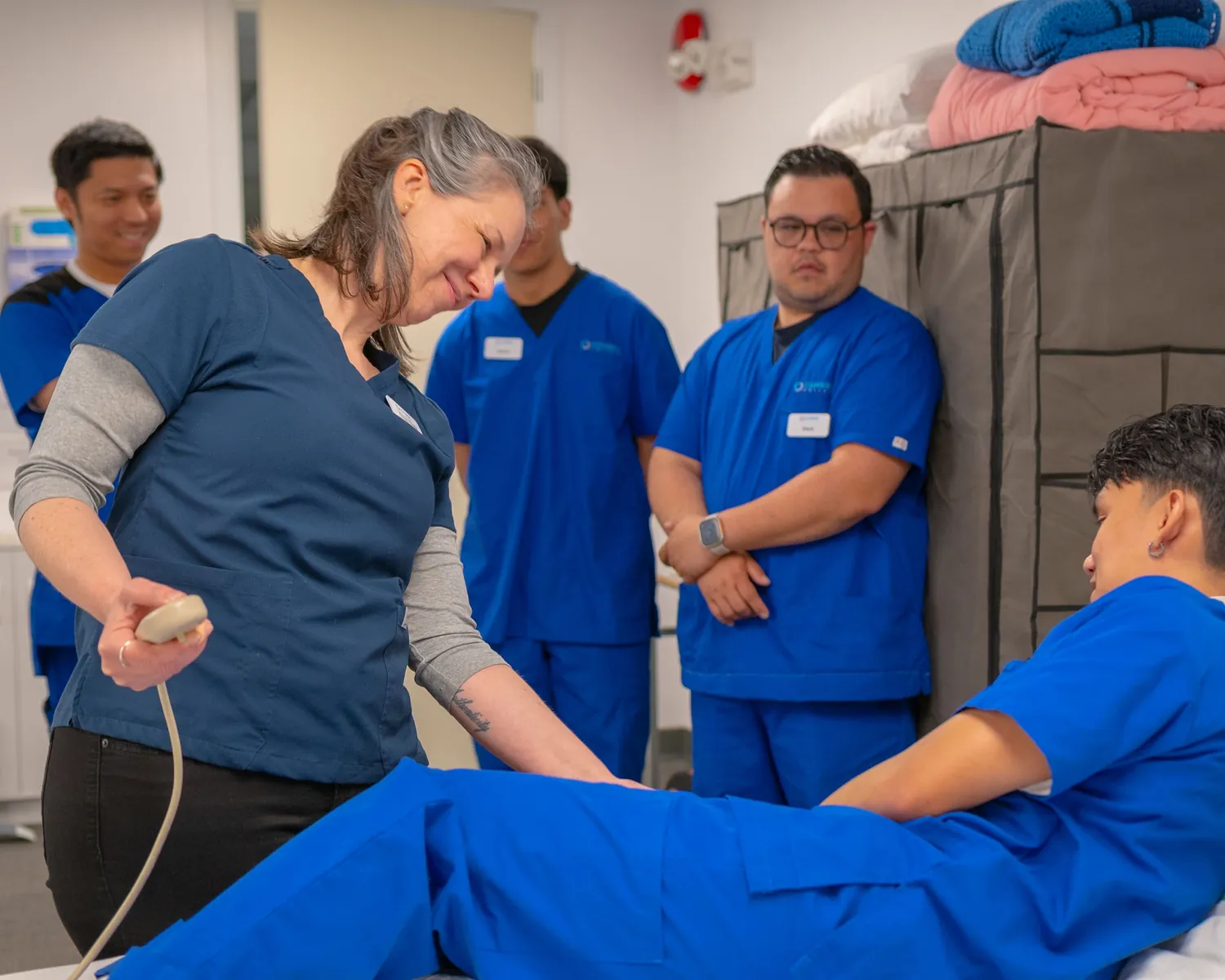
From Training Completion to Demonstrated Competency.
Traditional learning systems often focus on whether employees completed their assigned training.
But completion alone doesn't tell an organization what someone understands, where additional support is needed, or how knowledge develops over time.
PATHS makes learning visible through structured Steps, assessments, engagement records, and competency evidence.
Don't just know that training happened. Know what was learned.
Learn. Apply. Prove. Grow.
Workforce development is a continuing journey, not a one-time event.
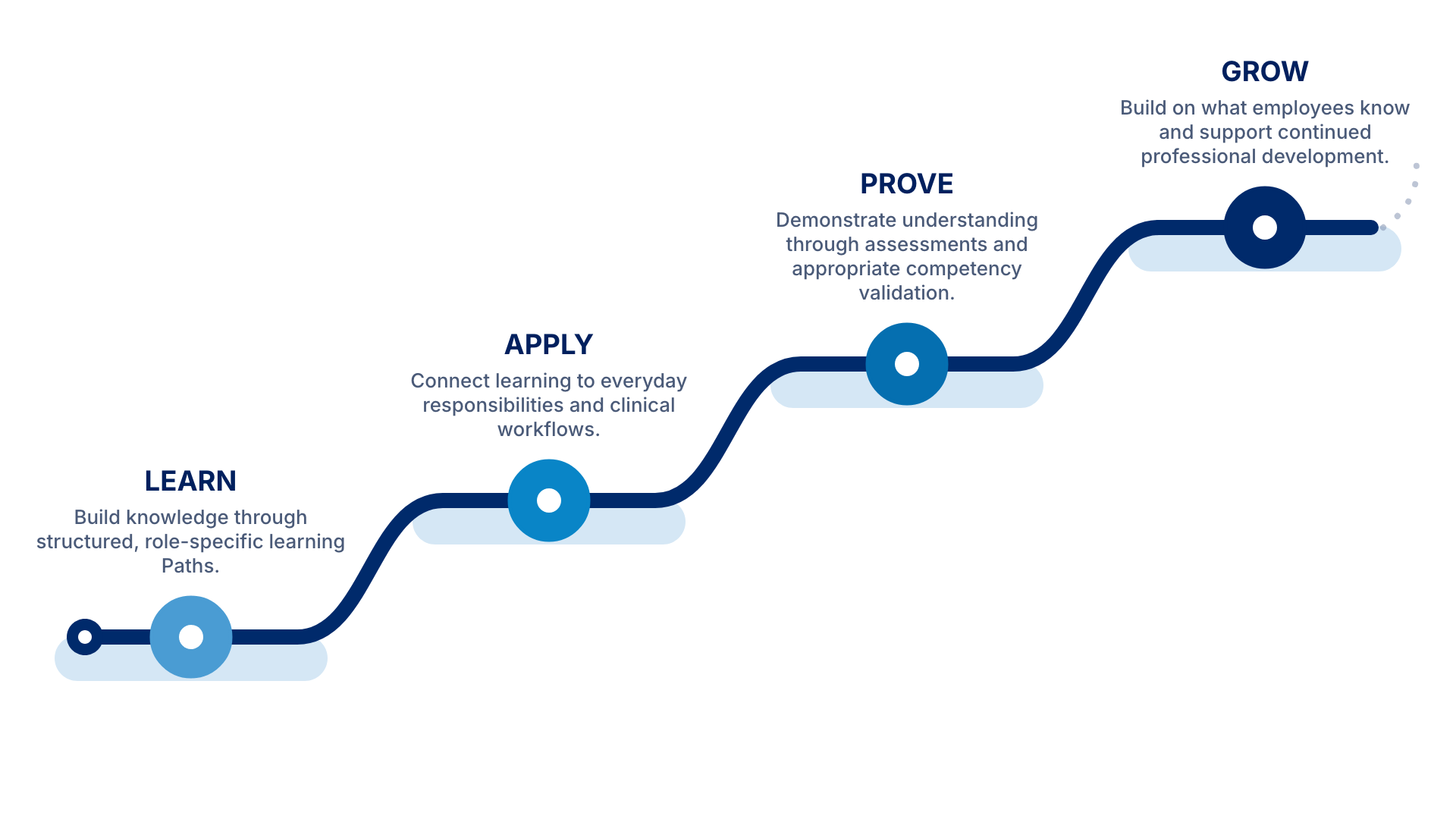
- 01
LEARN
Build knowledge through structured, role-specific learning Paths.
- 02
APPLY
Connect learning to everyday responsibilities and clinical workflows.
- 03
PROVE
Demonstrate understanding through assessments and appropriate competency validation.
- 04
GROW
Build on what employees know and support continued professional development.
One learning journey. A continuing opportunity to improve.
Make Workforce Development Visible Over Time.
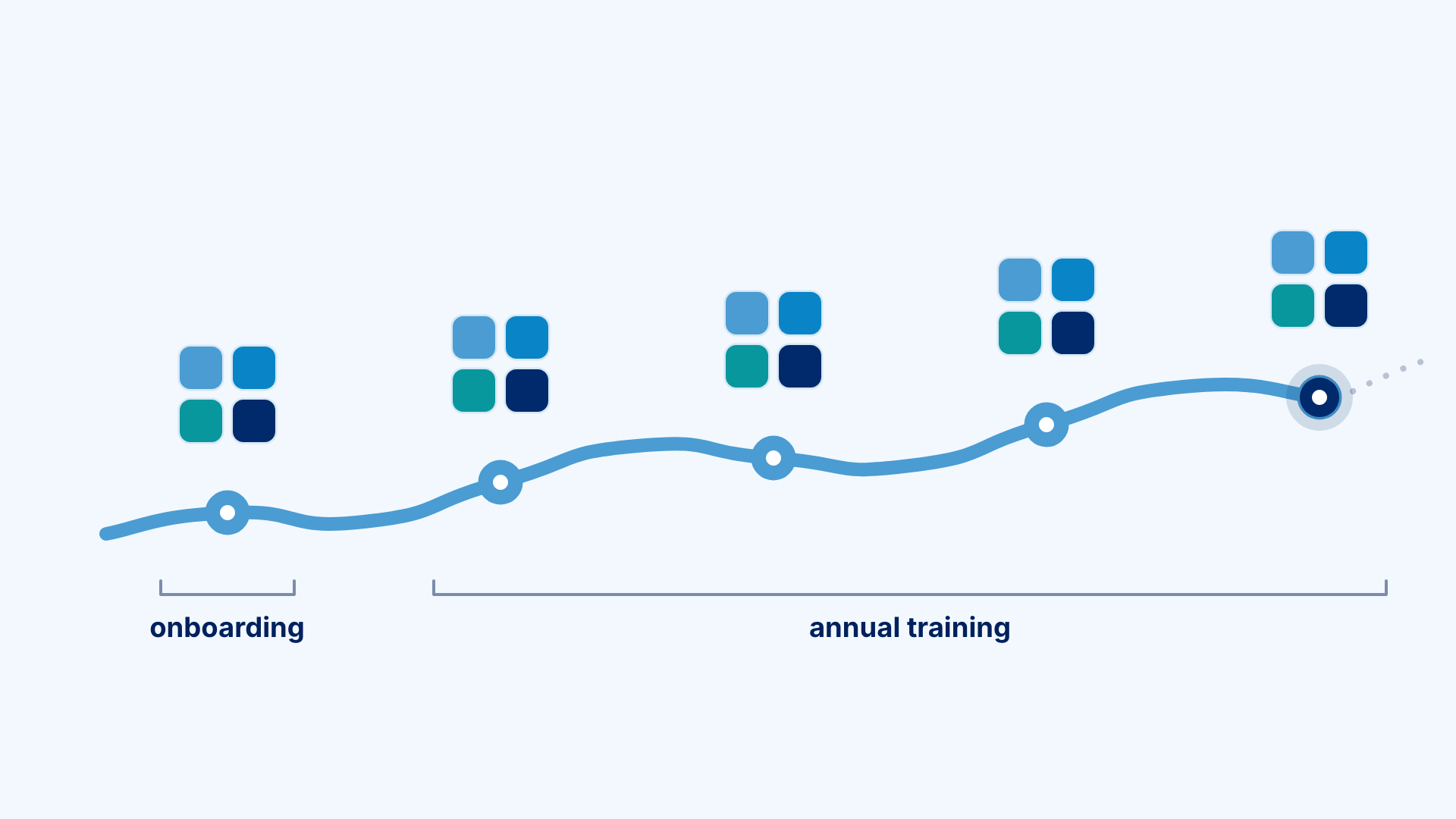
An employee's professional development doesn't end with onboarding or annual training.
PATHS creates a longitudinal record of learning, engagement, assessment results, and demonstrated understanding across years.
Employees can see their progress and what comes next. Leaders can identify knowledge gaps, provide targeted support, and understand workforce development across departments and locations.
By examining these records over time, organizations gain insight into where training is effective, where additional support is needed, and how learning experiences can be improved.
One employee. A continuing record of growth.
CMS Compliance & Competency Spotlight
Compliance Required. Competency Demonstrated.
Meet the Standard. Build the Workforce.
Mandatory training doesn't have to feel like a series of disconnected assignments.
PATHS transforms required education into structured, engaging learning journeys that help employees understand why their training matters, demonstrate what they've learned, and continue developing professionally.
Role-Specific Learning
Create a core training Path and tailor assignments to the requirements of different roles, departments, and locations.
Engagement Between Assignments
Use short videos and a consistent virtual guide to introduce upcoming assignments, reinforce important concepts, and encourage employees throughout the journey.
Knowledge & Competency Evidence
Capture engagement, assessment results, and demonstrated understanding, with additional competency validation where required.
Annual Training & Longitudinal Records
Build on previous learning with recurring requirements and maintain a continuing record of employee progress across years.
PATHS can also complement existing learning management systems, with integration and reporting options based on organizational needs and technical capabilities.
Build Workforce Agency. Strengthen Professional Fulfillment.
Healthcare professionals enter their careers to make a difference. But when employees lack the knowledge, confidence, resources, or support to meet the demands of their roles, professional fulfillment can suffer.
Research on self-efficacy, motivation, and occupational burnout highlights the importance of competence, autonomy, meaningful work, and the ability to make a positive difference.
PATHS helps organizations support employee agency through structured learning, demonstrated competency, and ongoing professional development.
As employees become better prepared to serve their patients, organizations can investigate whether greater capability is accompanied by stronger confidence, professional fulfillment, and a sense of purpose.
Can Greater Workforce Agency Contribute to Lower Burnout and Better Employee Retention?
By examining learning and competency alongside employee-reported agency, professional fulfillment, and workforce outcomes, healthcare organizations can begin to study this relationship over time.
Better prepared employees. Greater opportunity for professional fulfillment.
What Happens When You Train Your Workforce and Patients in the Same Ecosystem?
Healthcare organizations invest in workforce training and patient education, but these efforts often operate in separate systems.
Employees complete training. Patients receive guidance. Both generate valuable information, yet the relationship between workforce preparation and the patient experience can remain difficult to see.
PATHS brings workforce development and patient journeys into one learning ecosystem.
Healthcare professionals build knowledge and demonstrate understanding. Patients and caregivers receive actionable guidance, engage with their care plans, and demonstrate what they've learned.
Together, these journeys create an opportunity to ask a much bigger question:
Did Better Workforce Training Lead to Better Patient Outcomes?
By examining workforce competency alongside patient engagement, adherence, and relevant clinical outcomes, healthcare organizations can investigate whether improvements in employee preparation are associated with better patient care.
These insights can help organizations refine training, strengthen workflows, and evaluate changes over time.
Don't just measure what your workforce learned. Learn whether it made a difference for your patients.
Develop Your Workforce. Learn From the Results. Improve Patient Care.
Start with onboarding, annual competency requirements, or a single department. Measure what employees learn, improve the experience, and expand what works.