Turn Every Patient Journey Into Measurable Insight.

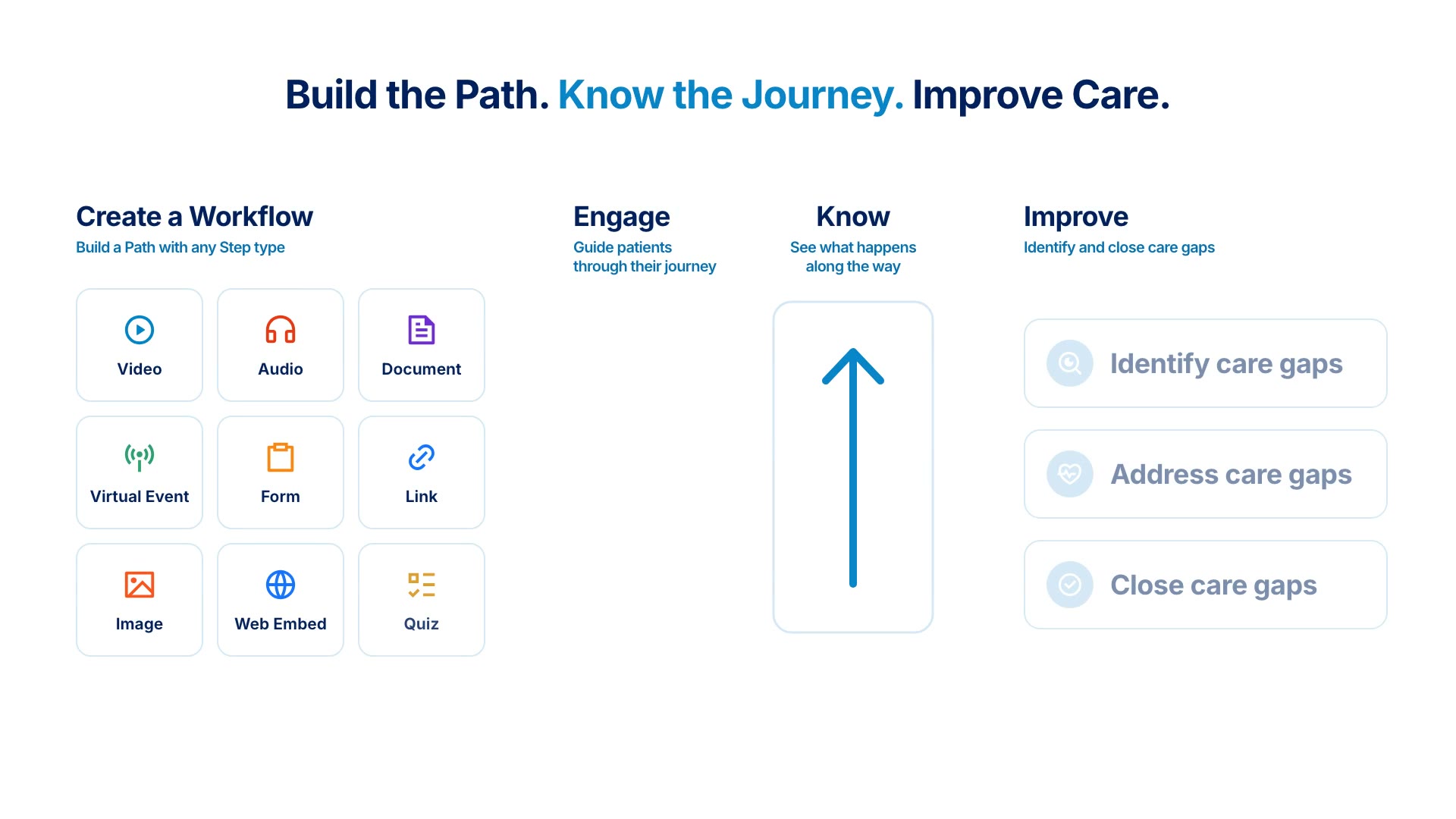
PATHS transforms clinical expertise into actionable patient journeys, captures how patients engage and follow through, and gives healthcare organizations the insights to continuously improve care and identify gaps in services.

A patient using crutches walks out of a hospital entrance toward the parking lot.

PATHS & the Learning Health System

Every patient interaction is an opportunity to learn. A Learning Health System uses insights from real experiences to improve care over time. PATHS brings this approach to everyday patient journeys, making engagement visible and continuous improvement possible.

From Path Creation to Closing Care Gaps.

Turn your team’s expertise into guided workflows using videos, documents, forms, assessments, and interactive Steps. Share them with patients and caregivers, learn from their experiences, and use those insights to identify gaps, refine services, and continuously improve care.

One Path. Multiple Ways to Connect.

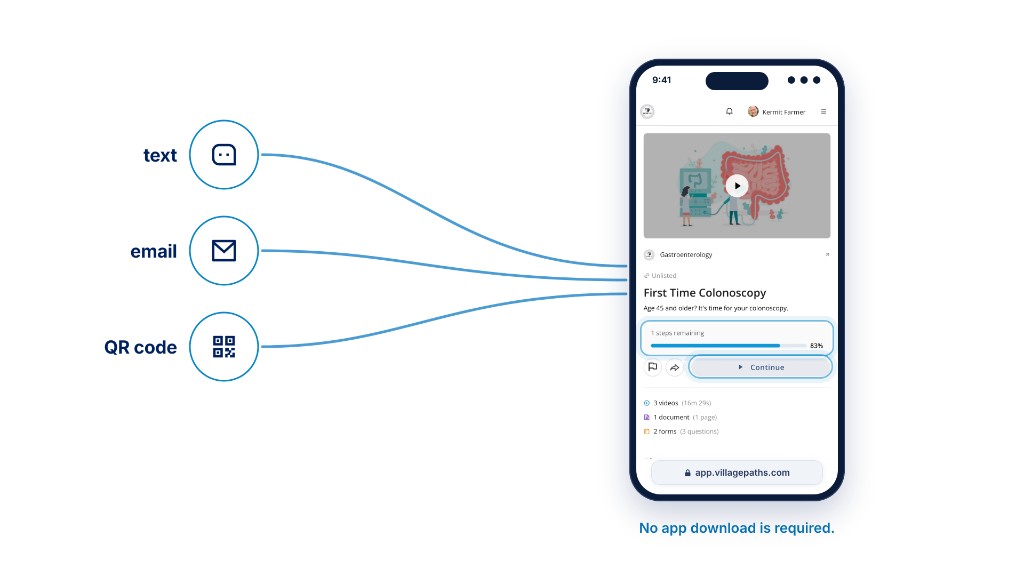
Once your Path is ready, share it by text, email, or QR code. Patients can access their guidance directly from their phone, wherever they are.

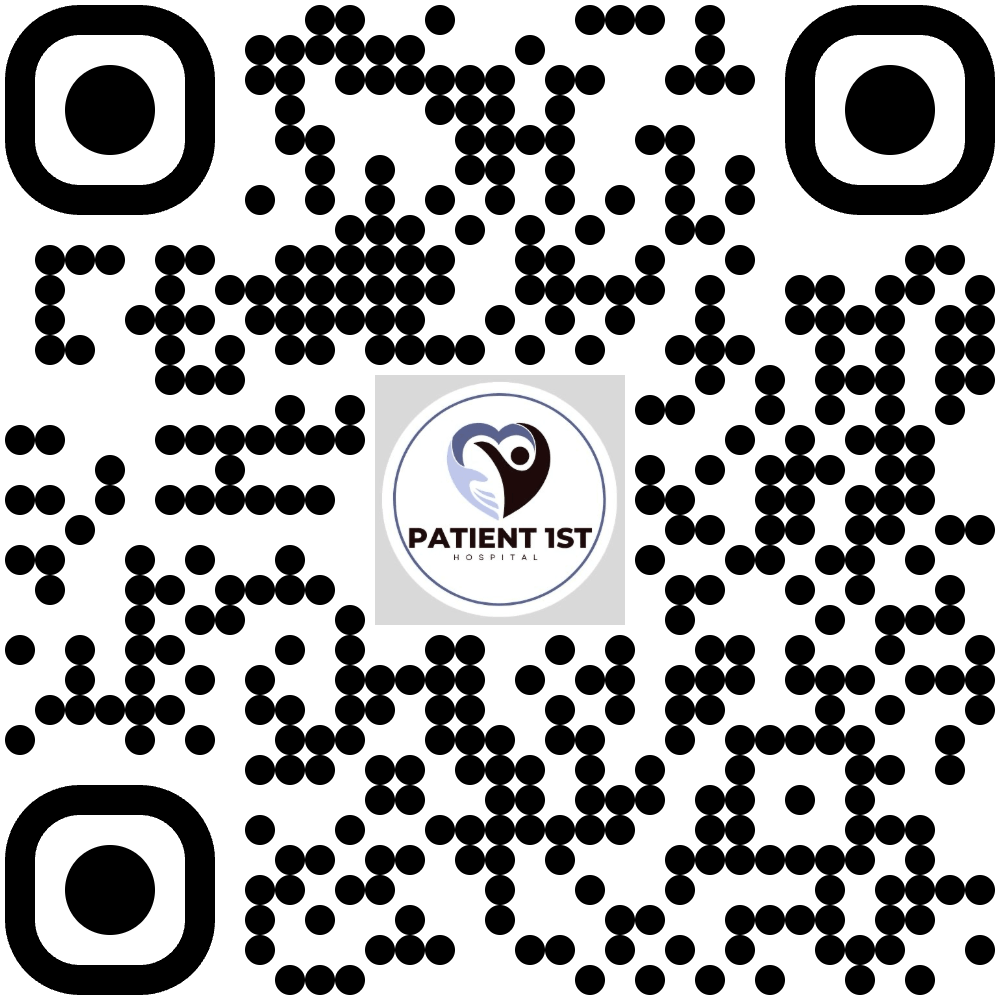
QR code that opens the First Time Colonoscopy demo path.

Scan to Experience a Path

Meet Angela. Her Care Leads to More Than One Path.

What began as a routine procedure led to a cancer diagnosis and an entirely different journey. From preparing for her procedure to understanding her diagnosis, navigating treatment, and looking forward to ringing the bell, Angela needed guidance at every stage. PATHS connects multiple Paths into an experience tailored to her changing needs. This journey is illustrative.

Different Patients. Different Journeys. One Learning Loop.

Angela’s experience is unique. So are Sophia’s, Robert’s, and Emily’s. Every person has a different journey through the health system, and every journey gives us something to learn.

Journey One

Sofia | Living With Epilepsy

A new epilepsy diagnosis can raise questions about treatment, medication, safety, and everyday life.

Sofia's journey demonstrates how a healthcare organization could guide a patient through the information and actions that matter most following diagnosis.

  1. Understanding the Diagnosis — Learn about epilepsy, common questions, and the care plan.
  2. Medication and Treatment — Review prescribed treatment guidance, medication education, and questions for the care team.
  3. Seizure Safety — Understand safety precautions, emergency guidance, and when to seek help.
  4. Everyday Life — Explore resources related to daily activities, routines, and managing the condition.
  5. Ongoing Care — Prepare for follow-up visits, complete assessments, and stay engaged with the care plan.

Throughout the journey, PATHS can help the care team understand which resources Sofia accessed, what she demonstrated through assessments, and where additional support may be helpful.

Journey Two

Robert and Emily | Navigating Dementia Together

Dementia changes more than the patient's clinical needs. It can also change the responsibilities of family members and caregivers.

Robert's journey includes his daughter, Emily, who helps him navigate care decisions, daily routines, and changing support needs.

  1. Understanding the Diagnosis — Provide accessible information about dementia and what the diagnosis may mean for Robert and his family.
  2. Planning Care Together — Help Robert and Emily understand the care plan, available resources, and questions to discuss with the clinical team.
  3. Safety and Daily Routines — Offer guidance on creating supportive routines and addressing everyday safety considerations.
  4. Supporting the Caregiver — Provide Emily with resources tailored to her responsibilities, including communication, support services, and caregiver well-being.
  5. Adapting as Needs Change — Update the journey with new guidance and resources as Robert's needs evolve.

PATHS can support distinct patient and caregiver experiences while helping healthcare organizations understand engagement across the broader care journey.

One Patient Journey Becomes Thousands of Opportunities to Learn.

As more patients engage with their Paths, your organization gains a growing understanding of what patients know, where they struggle, and how well workflows are working.

Six patients, each on a journey with a different number of steps, flow into the PATHS mark. The health system sees the whole story: patients supported, PATHS delivered, completion and engagement, documented value, and what patients are learning, where they get stuck, which workflows work, where staff time is recovered and which outcomes are improving.

One Learning Loop Three Views of Engagement.

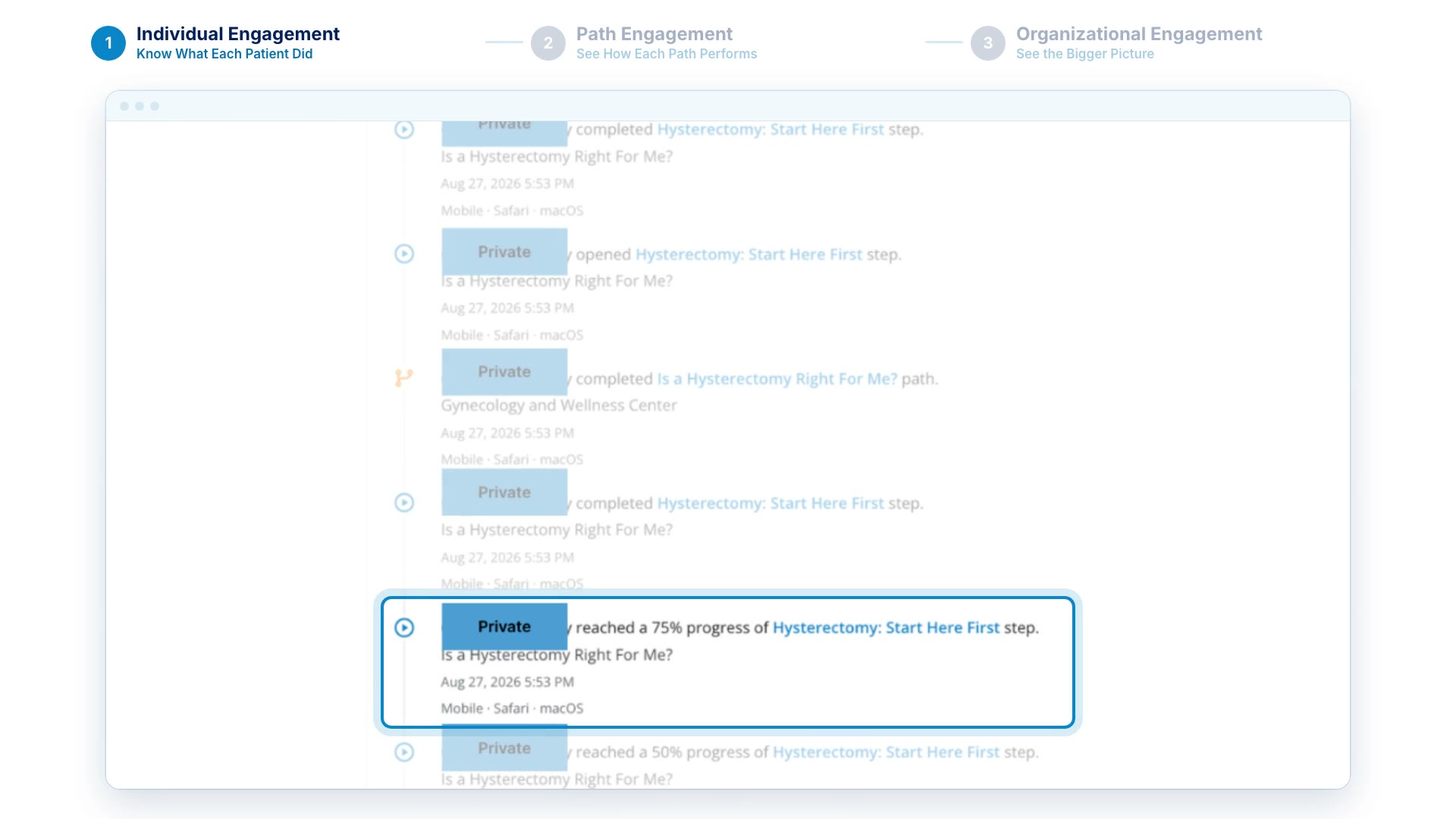
See what happens at every level, from an individual patient’s activity to the performance of a single Path and the broader organization. Understand completion, knowledge, and engagement so your team knows where to focus improvement efforts.

Discover Where Patients Struggle Between Clinical Visits.

Target the Care Gaps.

What happens between clinical visits can determine what happens next. PATHS reveals where patients and caregivers get stuck, what they understand, and where additional support is needed. With these insights, healthcare organizations can target care gaps, refine workflows, empower patients and caregivers, and improve the patient experience while creating opportunities for better outcomes and more efficient care.

A caregiver holds up a blister pack of medication as she talks it through with an older man at a kitchen table.

Start With the Journey That Matters Most.

From patient onboarding and surgical preparation to chronic disease management and recovery, PATHS can support virtually any specialty, department, or patient need. Explore the possibilities below and imagine what your organization could improve.

1Patient onboarding and enrollment

Help patients start with confidence and complete what matters.

Examples

  • New patient welcome
  • Registration & consents
  • Insurance verification
  • Portal sign-up & setup
  • What to expect
  • Financial counseling
  • Benefits overview
  • Privacy practices
  • Pre-visit intake
  • Care team introduction
  • First appointment prep

2Pre-operative and post-operative education

Prepare patients before surgery and support healing after.

Examples

  • Pre-op checklist & instructions
  • Medication & fasting guidance
  • Anesthesia overview
  • Day of surgery guide
  • Post-op recovery roadmap
  • Pain management education
  • Wound care instructions
  • Activity & lifting restrictions
  • Red flags & when to call
  • Follow-up appointments
  • Return to work/school

3Procedure-specific education and expectations

Set clear expectations for every procedure and test.

Examples

  • Colonoscopy
  • MRI / CT Scan
  • Cardiac catheterization
  • Endoscopy
  • Joint injection
  • Biopsy
  • Echo / Stress test
  • Angioplasty / Stent
  • Sleep study
  • Lumbar puncture
  • IV infusion
  • More procedures...

4Diagnosis and condition education

Help patients understand their condition and treatment plan.

Examples

  • Cancer (type-specific)
  • Heart failure
  • Diabetes
  • COPD / Asthma
  • Stroke
  • Hypertension
  • Arthritis
  • Depression / Anxiety
  • Chronic kidney disease
  • Migraine / Headache
  • Autoimmune disorders
  • And more...

5Caregiver resources

Support the people who care for your patients.

Examples

  • Caregiver education
  • Support groups
  • Respite care options
  • Mental health support
  • Caregiver stress tools
  • Communication tips
  • Safety at home
  • Managing medications
  • Behavioral guidance
  • End-of-life support
  • Care partner guides
  • And more...

6Diet, nutrition, and exercise

Build healthy habits to support treatment and overall well-being.

Examples

  • Personalized meal plans
  • Disease-specific nutrition
  • Weight management
  • Portion control guidance
  • Hydration education
  • Supplement guidance
  • Exercise at every level
  • Physical activity plans
  • Cardiac rehab education
  • Stress management
  • Healthy recipes
  • Lifestyle coaching

7Clinic and hospital navigation, including visual walkthroughs

Make it easy to find your way and know what to expect.

Examples

  • Campus & parking maps
  • Department locations
  • Check-in instructions
  • Wayfinding steps
  • Visitor information
  • Accessibility services
  • Virtual tours
  • Pre-visit walkthroughs
  • Entrance directions
  • Where to go, step-by-step
  • Before you arrive
  • What to bring

8Discharge, recovery, and follow-up care

Ensure safe transitions home and successful recovery.

Examples

  • Discharge instructions
  • Home care coordination
  • Medication list & changes
  • Diet & activity instructions
  • Equipment at home
  • Wound care
  • Warning signs
  • Follow-up appointments
  • Rehab plan & exercises
  • Transportation help
  • Return to work
  • Care after hours

9Longitudinal monitoring and patient check-ins

Stay connected over time and intervene when it matters most.

Examples

  • Post-discharge check-ins
  • Remote symptom monitoring
  • Blood pressure / glucose logs
  • Medication adherence
  • Wellness check-ins
  • Preventive screenings
  • Care plan adherence
  • Milestone tracking
  • Appointment reminders
  • Survey & feedback
  • Progress over time
  • Early risk alerts