


Medical Specialties
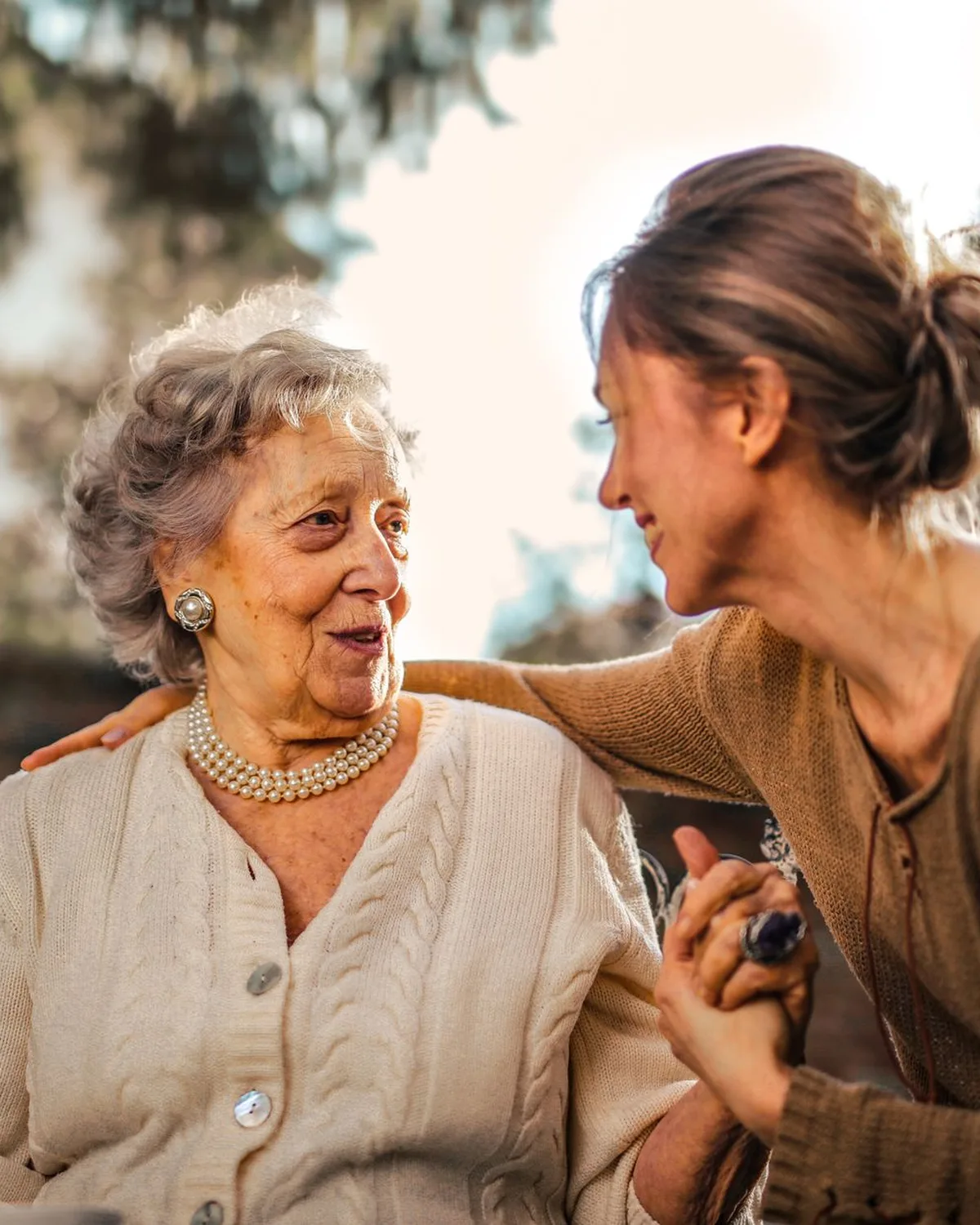
Advance Care Planning is not a form to complete. It is a journey of learning, reflection, conversation, and decision-making,1 and most patients arrive at that conversation unprepared.2,3,4
PATHS helps health systems guide patients and families through Advance Care Planning before the face-to-face conversation, then shows care teams who is ready, where people are stuck, and what to improve.
Because a signed form isn’t the same as a prepared patient.
Health systems have worked on Advance Care Planning for decades,5 yet since Medicare began paying for it in 2016, only a small share of Medicare patients have had a billed Advance Care Planning conversation.6,7,8
The reasons are familiar. Clinicians have little time.2,9 Patients don’t know the terms.3 Families have never talked.4 And leaders can see how many directives were uploaded, but not whether patients understood their choices.5,10
PATHS makes Advance Care Planning visible through structured Steps, knowledge checks, reflections, signed acknowledgments, and engagement records.
Don’t just know a directive was signed. Know your patients are ready.
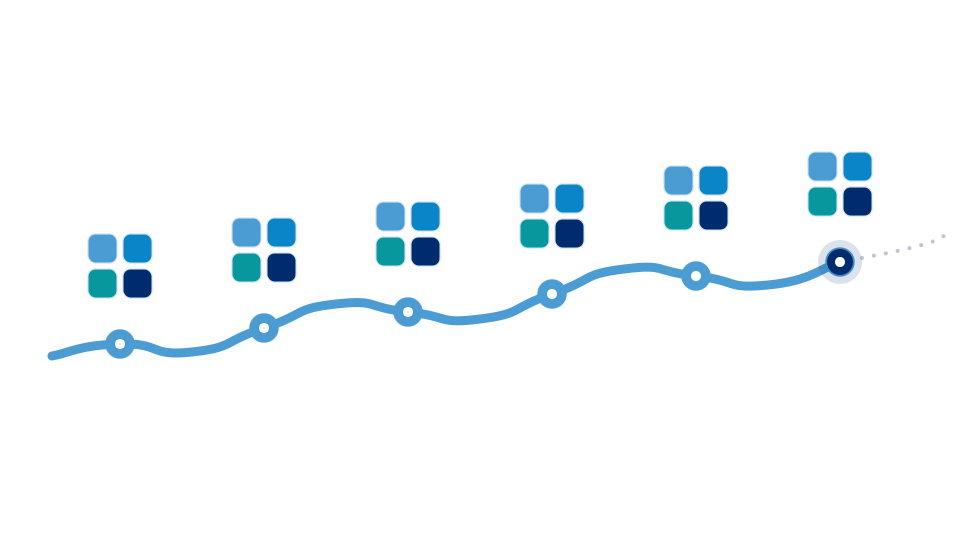
Advance Care Planning is a continuing journey, not a one-time event.
Build Advance Care Planning Paths around your clinical guidance, your state’s requirements, and your patients.
Guide patients and families with short videos, plain-language reading, and reflection, at their own pace and on their phone.
See what each patient understands, who they trust to speak for them, and who is ready for a conversation.
Learn where patients get stuck and strengthen the journey for everyone who follows.
One patient journey. A continuing opportunity to improve.
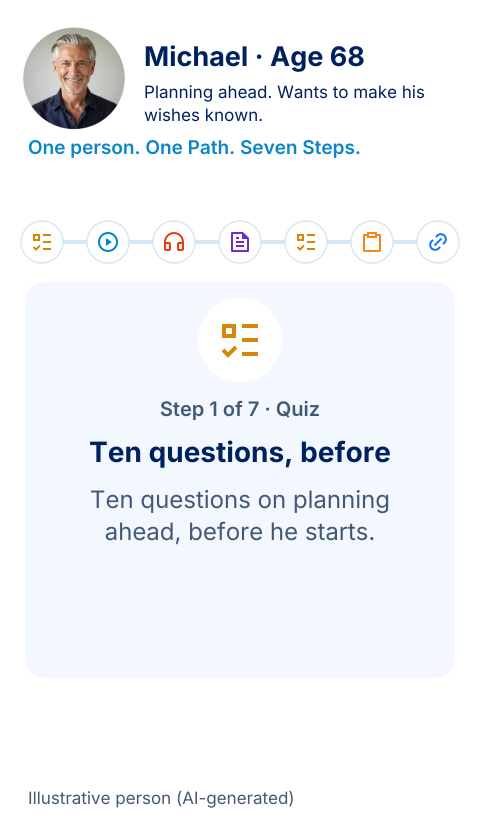
Follow Michael through an illustrative seven-Step Path, the first on his Advance Care Planning journey. A hospital could use this structure to prepare patients for their first planning conversation, show what they learned with the same questions before and after, and schedule time with a real person on the care team.
My Care. My Wishes. My Voice. Path
Illustrative person (AI-generated). Illustrative educational Path. Completing the Path does not create an advance directive.
Show what they know before and after, using the same ten questions. Michael answers them first, before he starts.
Learn what Advance Care Planning is, and what it isn’t: a process of learning, reflection and conversation over time, not just a form to complete or something only for people who are very old or ill.
Reflect on what matters most and who they trust to speak for them. A guided reflection helps Michael think about his values and the person he would ask to be his health care agent.
Learn how planning ahead works in their state, starting with California. For Michael, that means California’s advance health care directive, where he can name his agent and record his wishes.
The same ten questions again, after the lessons, so Michael can see what he has learned.
Confirm their understanding with a signed acknowledgment. Michael signs to confirm what he has learned; completing his directive comes in his next Path.
Schedule a conversation with a real person on the care team. Michael picks a time to talk through his wishes and questions.
Assign a value to the My Care. My Wishes. My Voice. Path and see the results.
How many times your team already does this workflow each year.
65.5staff hours saved per year
$2,291estimated value per year
Change the assumptions above to see your estimate of time and money saved.
CREATE
Advance care planning facilitators turn the first conversation they repeat with every patient into a structured Path and assign it a value of 21 minutes of staff education time saved per patient.
ENGAGE
Each year, 187 patients like Michael start advance care planning with the My Care. My Wishes. My Voice. Path, saving 21 minutes of education time each.
KNOW
That adds up to 3,927 minutes (65.5 hours) of staff time, worth an estimated $2,291 a year at $35.00 an hour.
IMPROVE
Engagement, knowledge checks and questions show where advance care planning education was clear or confusing, so the care team can refine it for the next patient.
Every Advance Care Planning Journey Creates an Opportunity to Improve the Next.
Estimates are illustrative and use the assumptions above. They are not measured results.
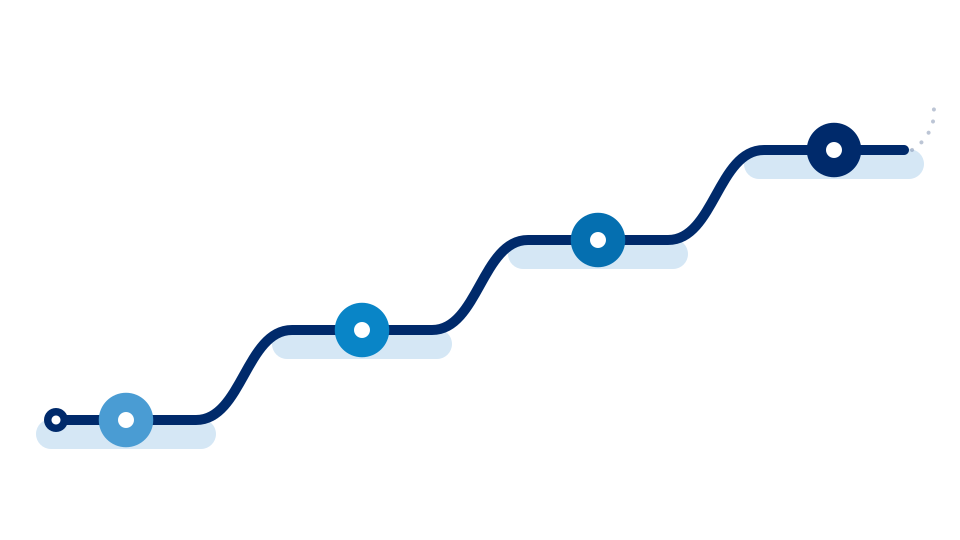
Michael's planning doesn't stop at one Path. Advance care planning unfolds over years, and the health system provides a Path for each step: a first conversation, making his wishes official, preparing his healthcare agent, keeping his wishes accessible, and understanding palliative and hospice care if a serious diagnosis comes. Each Path Michael completes also shows his care team what he engaged with, what he understood and what he still had questions about.
Michael completes his advance directive with guidance. The steps patients pause on show the team where more help is needed.
Michael helps the person who will speak for him understand his wishes. The questions agents ask show the team where the guidance can be clearer.
Michael reviews and updates his plans as life changes. That helps the team keep his care aligned with what matters to him.
The more the health system knows about each patient's experience and journey, the better it can make its workflows. What Michael and every other patient engage with, understand and ask about becomes health system intelligence: the team learns from every patient and refines each Path, so the next patient's experience is better. Clearer Paths mean fewer repeat calls and less time re-teaching the same education, and that saves time and money across the health system.
Medical Specialties

Cardiovascular

Neurosciences

Neurosciences

Cancer

Neurosciences
1–6 of 25
Imagine inviting 2,000 patients to begin Advance Care Planning. How many engaged? How many understood their options? How many have thought about who would speak for them? How many asked for a conversation, and where did others stop?
PATHS answers those questions from the journey itself: a longitudinal record of learning, reflections, acknowledgments, and engagement that builds over time. Combined with your EHR or care team follow-up, it shows the full path from invitation to completed plan.
One patient. A continuing record of their wishes.
When patients arrive already understanding the terms, having reflected on their values, and having talked with family, the clinician’s time goes to decisions, not definitions.2
We’ve seen this pattern before. In a CMS GUIDE dementia care workflow built on PATHS,11 families finish the GUIDE enrollment Path in about nine minutes, and the hospital reports saving about 45 minutes of social worker time on each GUIDE submission to CMS.12
Every organization’s numbers are its own. PATHS shows where time is saved, using the assumptions your team sets.
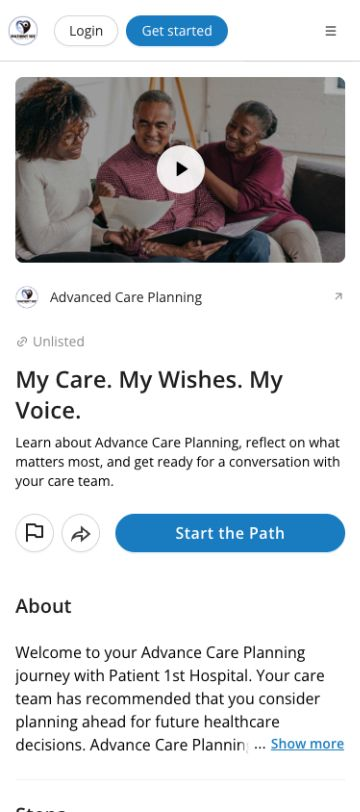
My Care. My Wishes. My Voice.
Our first Path prepares patients for their first Advance Care Planning conversation. In 12 short Steps, patients:
You’ll create a free account first, so your progress is saved.
See how PATHS can help your organization make Advance Care Planning a journey every patient can finish.