


Medical Specialties
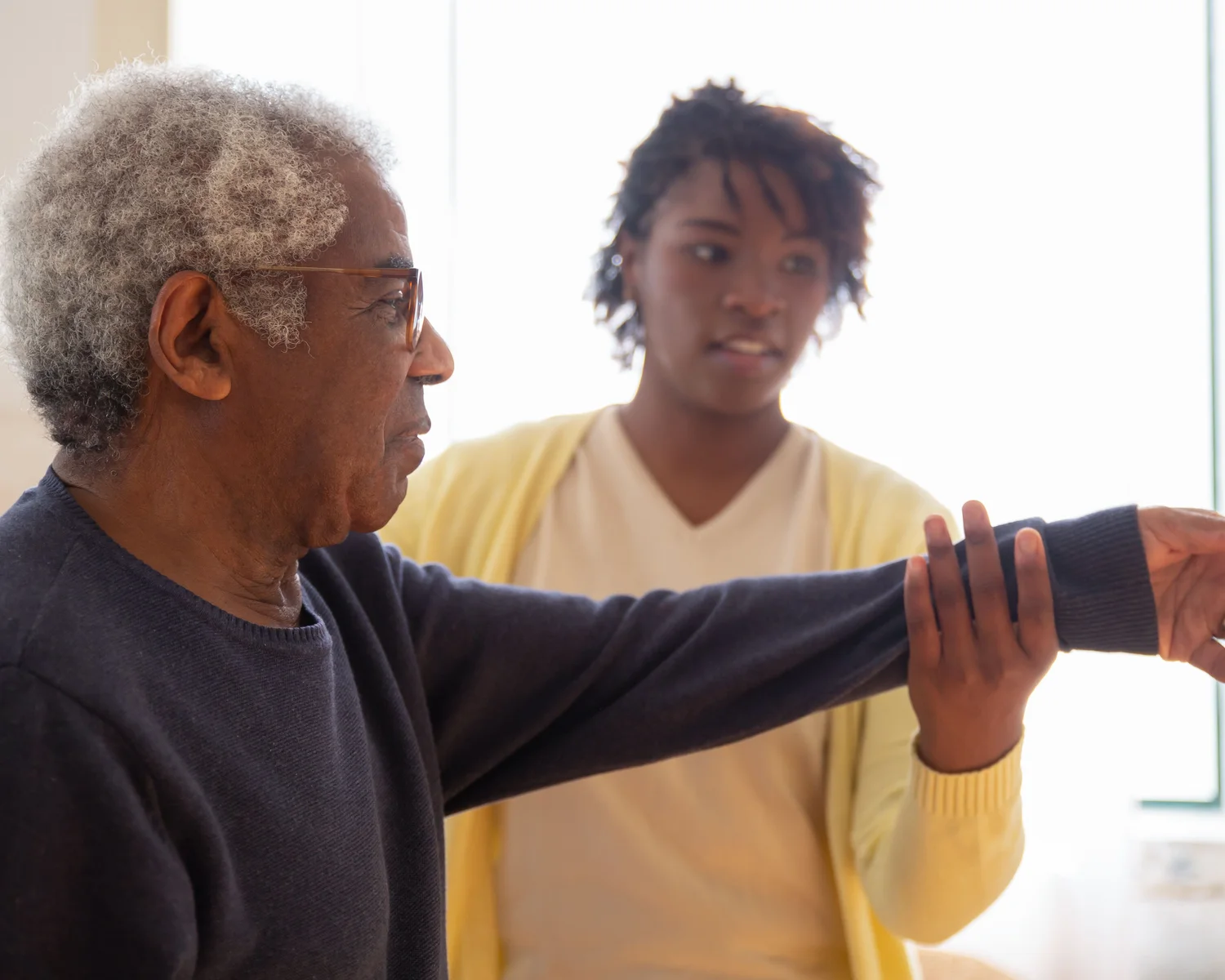
After a stroke, most of the work moves home: new medicines, blood pressure control, therapy, mood changes and a family caregiver learning as they go.
PATHS helps healthcare organizations turn clinical expertise into actionable patient journeys, giving patients and caregivers clear guidance while providing care teams with visibility into engagement, understanding, and progress.
After a stroke, most of the work moves home: new medicines, blood pressure control, therapy, mood changes and a family caregiver learning as they go. The weeks between discharge and follow-up are when gaps in understanding and medication habits show up.2
795,0001
Strokes in the U.S. each year
Nearly 1 in 41
Strokes that happen to someone who has already had one
12.1%6
Ischemic stroke patients readmitted within 30 days
More than 795,000 people in the U.S. have a stroke each year, and nearly 1 in 4 of those strokes happens to someone who has had one before. In a North Carolina program, many patients seen within two weeks of discharge still had gaps: 36% did not recognize blood pressure as a stroke risk factor and 19% were not taking medicines as prescribed.1,2
Medicare's transitional care rules ask teams to reach each patient within 2 business days, see them within 7 to 14 days, and handle education, medication adherence and community referrals in between. That work is hard to staff. In a statewide North Carolina trial, 61% of hospitals that declined to join cited insufficient staff or financial resources, and only 24% of enrolled patients received the full billable follow-up.3,4,5
About 12% of ischemic stroke patients are readmitted within 30 days, and more than 20% of those readmissions are for acute cerebrovascular problems such as another stroke. About one third of survivors develop post-stroke depression, which is linked to higher risk of recurrent vascular events, poor quality of life and death. Stroke outcomes are public, too: CMS includes a hospital 30-day stroke mortality measure in its public reporting on Care Compare.6,7,8
A Cochrane review of 14 trials found that stroke self-management programs improved quality of life and confidence. Organized follow-up models gave patients 44% higher odds of reaching blood pressure targets, while education alone did not change risk factors. At one academic center, patients who attended a nurse-led transitional stroke clinic had about half the odds of a 30-day readmission. These findings concern staffed stroke programs, not PATHS. A Path could connect the team's education and agreed next steps for patients and caregivers.9,10,11
Healthcare teams have a critical responsibility to educate and prepare patients for that journey. But once patients leave the clinical setting, how do we know they're ready?
Do they understand their care plan? Can they apply what they've learned? Are they following through? Where do they need additional support?
Preparing patients for the journey is essential. Knowing how they're managing it creates the opportunity to improve care.
Education and knowledge
Help patients and caregivers understand stroke recovery and the information their team provides.
Tasks, decisions, follow-through
Prepare families for rehabilitation and follow-up conversations using team-selected guidance.
Medications, appointments, self-care
Connect education about the agreed recovery plan, appointments and support at home.
Assessments and engagement evidence
Check understanding and show the team where patients or caregivers need more explanation.
Follow Denise through an illustrative seven-Step Path. A hospital could use this structure to organize education selected by its care team, help people prepare questions and connect them with follow-up and support.
Stroke Recovery at Home Path
Illustrative person (AI-generated). Illustrative educational Path. Completion does not establish a clinical outcome.
Learn how Denise’s care team and chosen support person can help with next steps.
Keep medicine, home-safety and any swallowing instructions from the team together.
Revisit safe movement and daily tasks chosen by her rehabilitation team.
Hear short coping guidance, with a text option suited to her communication needs.
Denise prepares questions about transport, daily help and access to rehabilitation.
Practice recognizing new stroke symptoms and calling 911 immediately, even if symptoms go away.
Find the team’s rehabilitation contacts, appointments and caregiver resources.
Assign a value to the Stroke Recovery at Home Path and see the results.
How many times your team already does this workflow each year.
65.5staff hours saved per year
$2,291estimated value per year
Change the assumptions above to see your estimate of time and money saved.
CREATE
Stroke nurses and therapists turn the discharge teaching they repeat with every patient into a structured Path and assign it a value of 21 minutes of staff education time saved per patient.
ENGAGE
Each year, 187 patients like Denise go home after a stroke with the Stroke Recovery at Home Path, saving 21 minutes of education time each.
KNOW
That adds up to 3,927 minutes (65.5 hours) of staff time, worth an estimated $2,291 a year at $35.00 an hour.
IMPROVE
Engagement, knowledge checks and questions show where recovery guidance was clear or confusing, so the care team can refine it for the next patient.
Every Stroke & Recovery Journey Creates an Opportunity to Improve the Next.
Estimates are illustrative and use the assumptions above. They are not measured results.
Denise's care doesn't stop at one Path. After her stroke, the health system could provide a Path for each part of her recovery: her recovery plan, daily activities, coping and communication, recognizing a stroke emergency, and rehabilitation. Each Path Denise completes also shows her care team what she engaged with, what she understood and what she still had questions about.
Denise can revisit the safe movement and daily tasks her rehabilitation team chose whenever she needs them. The steps patients revisit most show where the guidance can be clearer.
Denise and her support person practice recognizing new stroke symptoms. Knowledge checks show the team which warning signs need clearer teaching.
Denise finds her rehabilitation contacts and appointments in one place. Knowing where patients get stuck helps the team keep more of them connected to rehab.
The more the health system knows about each patient's experience and journey, the better it can make its workflows. What Denise and every other patient engage with, understand and ask about becomes health system intelligence: the team learns from every patient and refines each Path, so the next patient's experience is better. Clearer Paths mean fewer repeat calls and less time re-teaching the same education, and that saves time and money across the health system.
Medical Specialties
Cardiovascular
Neurosciences
Neurosciences
Cancer
Surgery
1–6 of 25
Improving stroke recovery care doesn't require changing every workflow at once.
Start with a patient journey that matters to your organization. Build a structured approach, understand how patients and caregivers engage, and use what you learn to improve the experience.