




Medical Specialties
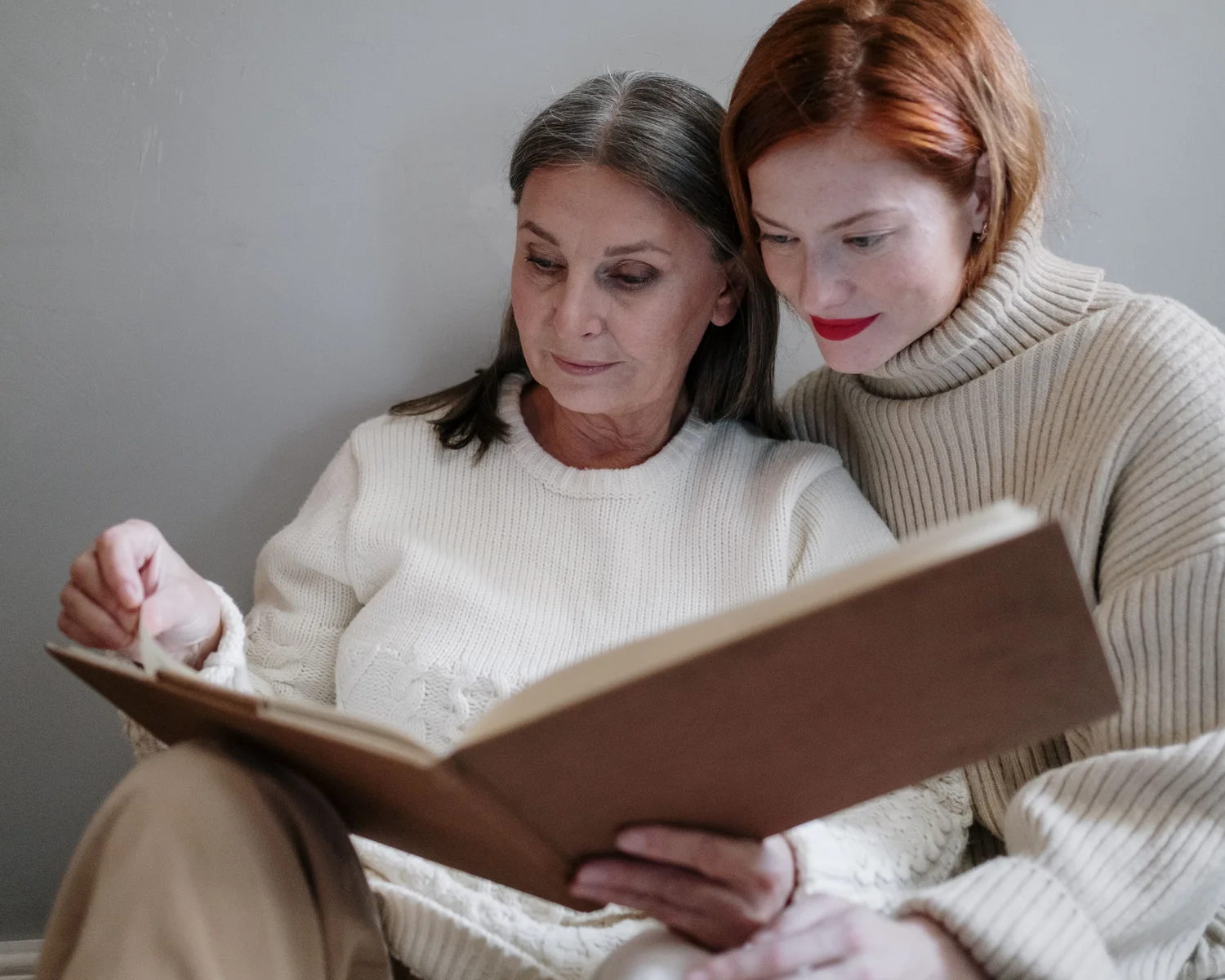
Memory changes can turn familiar routines into daily questions about medicines, safety and support.
PATHS helps healthcare organizations turn clinical expertise into actionable patient journeys, giving patients and caregivers clear guidance while providing care teams with visibility into engagement, understanding, and progress.
Memory changes can turn familiar routines into daily questions about medicines, safety and support. Families need guidance they can return to as a person's needs change.
7.2M1
Americans age 65+ estimated to have Alzheimer's dementia in 2025
19.2B1
Hours of unpaid care for Americans with dementia in 2024
$5263
Lower monthly Medicare claims per beneficiary in a staffed dementia-care trial analysis, before program costs and excluding Part D
An estimated 7.2 million Americans age 65 and older had Alzheimer's dementia in 2025. Nearly 12 million unpaid caregivers provided 19.2 billion hours of care for people with Alzheimer's or other dementias in 2024.1
Effective support takes continuing contact. In the U.S. Care Ecosystem trial, trained navigators made an average of 15.3 calls per patient-caregiver pair over a year, backed by a nurse, social worker and pharmacist.2
Dementia creates substantial demands on families and health services. Average Medicare payments for beneficiaries age 65 and older with dementia were nearly three times those for beneficiaries without it. Those payments describe overall care use, not costs proved preventable by education.1
The Care Ecosystem randomized trial improved patient quality of life, reduced emergency department use and eased caregiver depression and burden. Hospital use did not significantly change. A later analysis of 460 Medicare beneficiaries found lower claims payments, excluding prescription drugs and before program costs.2,3
Healthcare teams have a critical responsibility to educate and prepare patients for that journey. But once patients leave the clinical setting, how do we know they're ready?
Do they understand their care plan? Can they apply what they've learned? Are they following through? Where do they need additional support?
Preparing patients for the journey is essential. Knowing how they're managing it creates the opportunity to improve care.
Education and knowledge
Help patients and caregivers understand the diagnosis and prepare questions for the care team.
Tasks, decisions, follow-through
Guide families through the next steps their care team has agreed with them.
Medications, appointments, self-care
Bring the team's guidance on routines, appointments and caregiver support into one journey.
Assessments and engagement evidence
Use questions and assessments to see what caregivers understand and where they need more support.
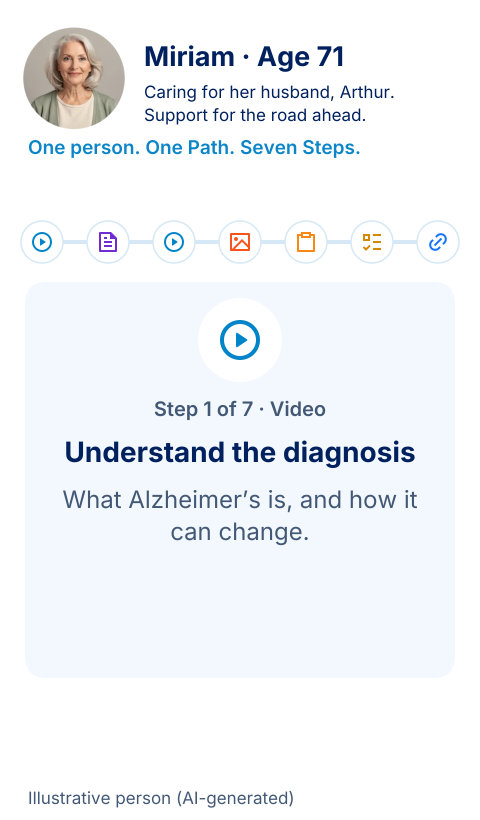
Follow Miriam, who cares for her husband, Arthur, through an illustrative seven-Step Path. A hospital or GUIDE program could use this structure to share care-partner education its team selects, notice changes early and connect families with training, support and respite.
Illustrative person (AI-generated). Illustrative educational Path. Completion does not establish a clinical outcome.
What Alzheimer’s disease is, how it can change over time, and what Arthur’s care team will focus on.
A simple daily routine for meals, medicines, activity and rest that she can adjust as his needs change.
Simple, calm ways to talk, offer one or two simple choices and ease frustration for both of them.
A room-by-room picture of safety ideas, including locks, lighting and steps if he tends to wander.
Miriam notes changes in Arthur’s mood, sleep and behavior to discuss at their next visit.
Practice when to call Arthur’s care team right away, such as for sudden changes in behavior, and when to call 911, such as if he is missing and not quickly found.
Find the caregiver training, support and respite services his dementia care program offers her.
Assign a value to the Understanding Dementia Path and see the results.
How many times your team already does this workflow each year.
65.5staff hours saved per year
$2,291estimated value per year
Change the assumptions above to see your estimate of time and money saved.
CREATE
Memory clinic clinicians turn the diagnosis education they repeat with every family into a structured Path and assign it a value of 21 minutes of staff education time saved per patient.
ENGAGE
Each year, 187 families like Miriam's learn about a new dementia diagnosis with the Understanding Dementia Path, saving 21 minutes of education time each.
KNOW
That adds up to 3,927 minutes (65.5 hours) of staff time, worth an estimated $2,291 a year at $35.00 an hour.
IMPROVE
Engagement, knowledge checks and questions show where dementia education was clear or confusing, so the care team can refine it for the next patient.
Every Alzheimer's & Dementia Journey Creates an Opportunity to Improve the Next.
Estimates are illustrative and use the assumptions above. They are not measured results.
What begins with Arthur's Alzheimer's diagnosis leads to more than one Path. From understanding dementia to the memory clinic, his medicines, home routines, planning together for the future, wandering at night, her own well-being as a caregiver and his memory clinic review, Miriam needs guidance at every stage. PATHS connects multiple Paths into an experience tailored to her changing needs, and each Path could save the care team time, not only the first. This journey is illustrative.
Miriam's care for Arthur doesn't stop at one Path. After his diagnosis, the memory clinic provides a Path for each part of the journey: understanding dementia, home routines, his medicines, Miriam's well-being as a caregiver, and planning together for the future. Each Path Miriam completes also shows the care team what she engaged with, what she understood and what she still had questions about.
Miriam has the team's guidance on familiar routines whenever she needs it. The questions families ask show the team which parts of daily care need clearer support.
Miriam finds support for the demands of caring for Arthur. How caregivers respond helps the team see who may need more help, and sooner.
Miriam and Arthur prepare for a conversation about his future wishes. Knowing what families want to discuss helps the team use visit time well.
The more the health system knows about each patient's experience and journey, the better it can make its workflows. What Miriam and every other family engage with, understand and ask about becomes health system intelligence: the team learns from every patient and refines each Path, so the next patient's experience is better. Clearer Paths mean fewer repeat calls and less time re-teaching the same education, and that saves time and money across the health system.
Medical Specialties

Cardiovascular
Neurosciences

Cancer

Neurosciences

Surgery
1–6 of 25
Improving Alzheimer's and dementia care doesn't require changing every workflow at once.
Start with a patient journey that matters to your organization. Build a structured approach, understand how patients and caregivers engage, and use what you learn to improve the experience.